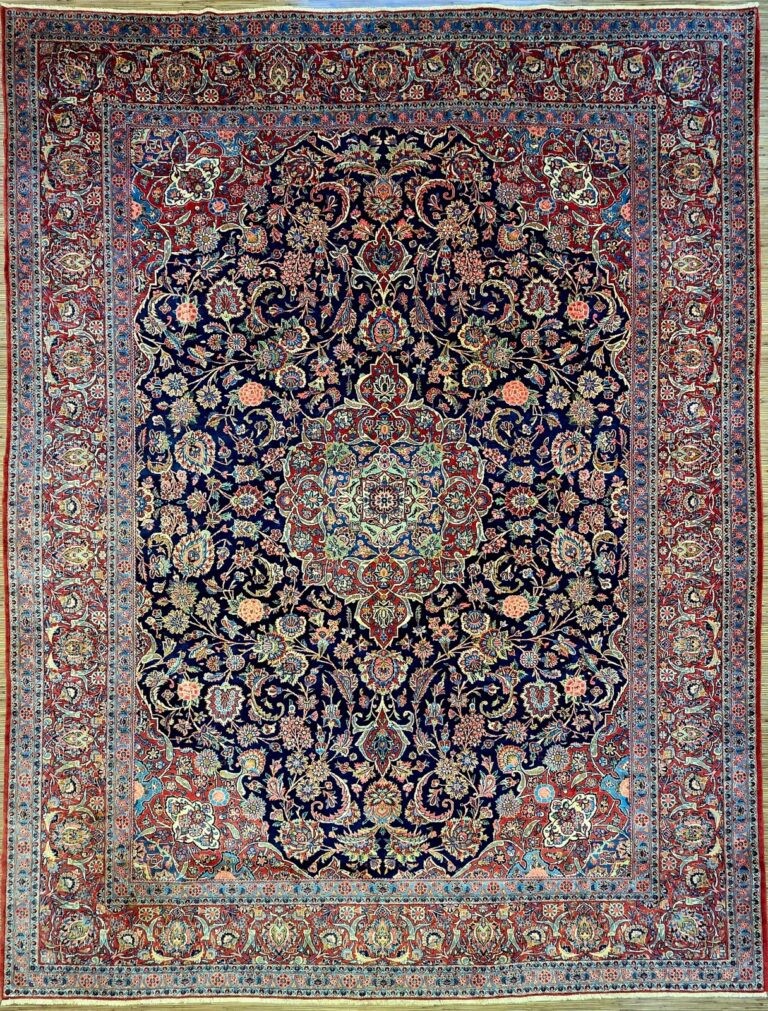
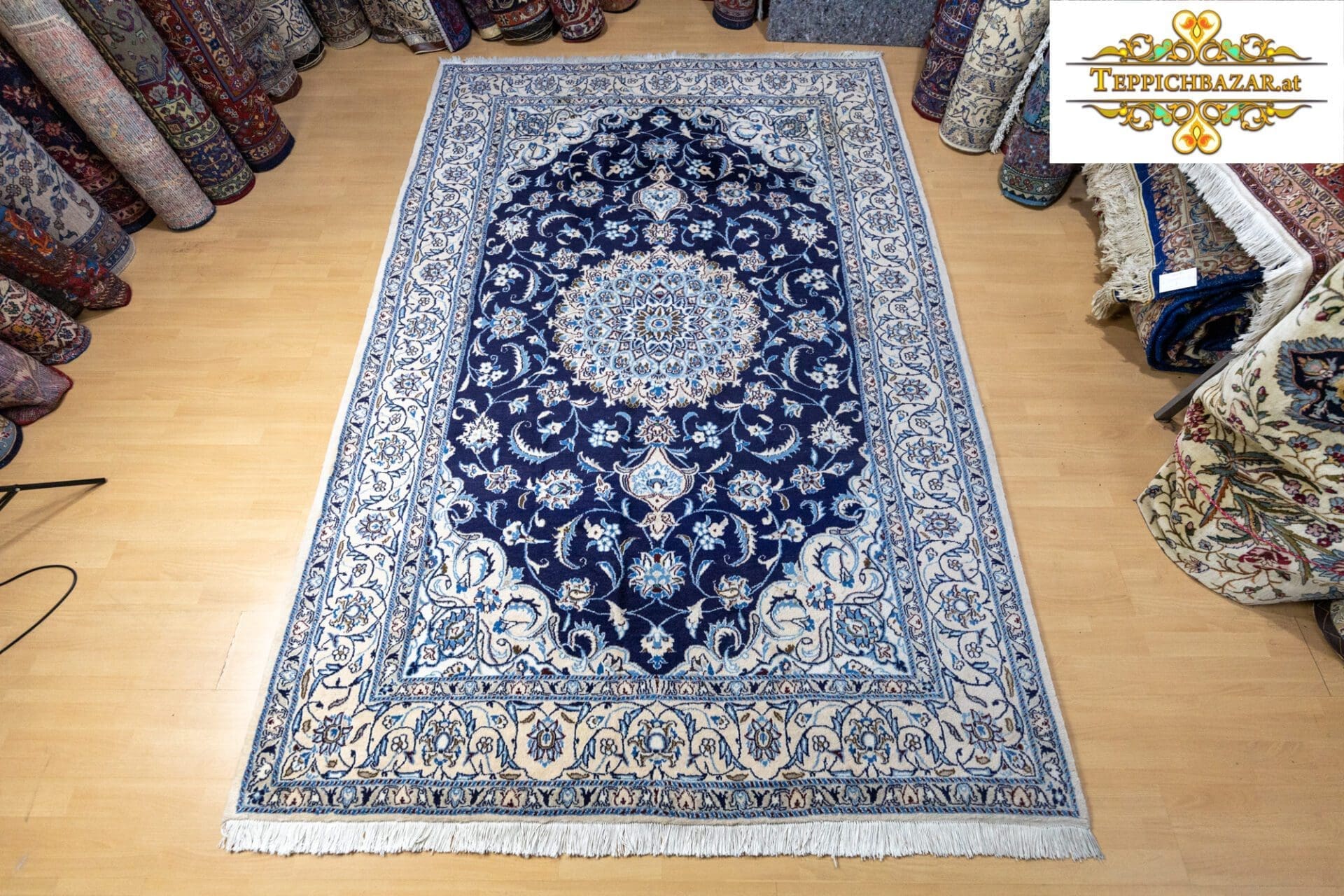
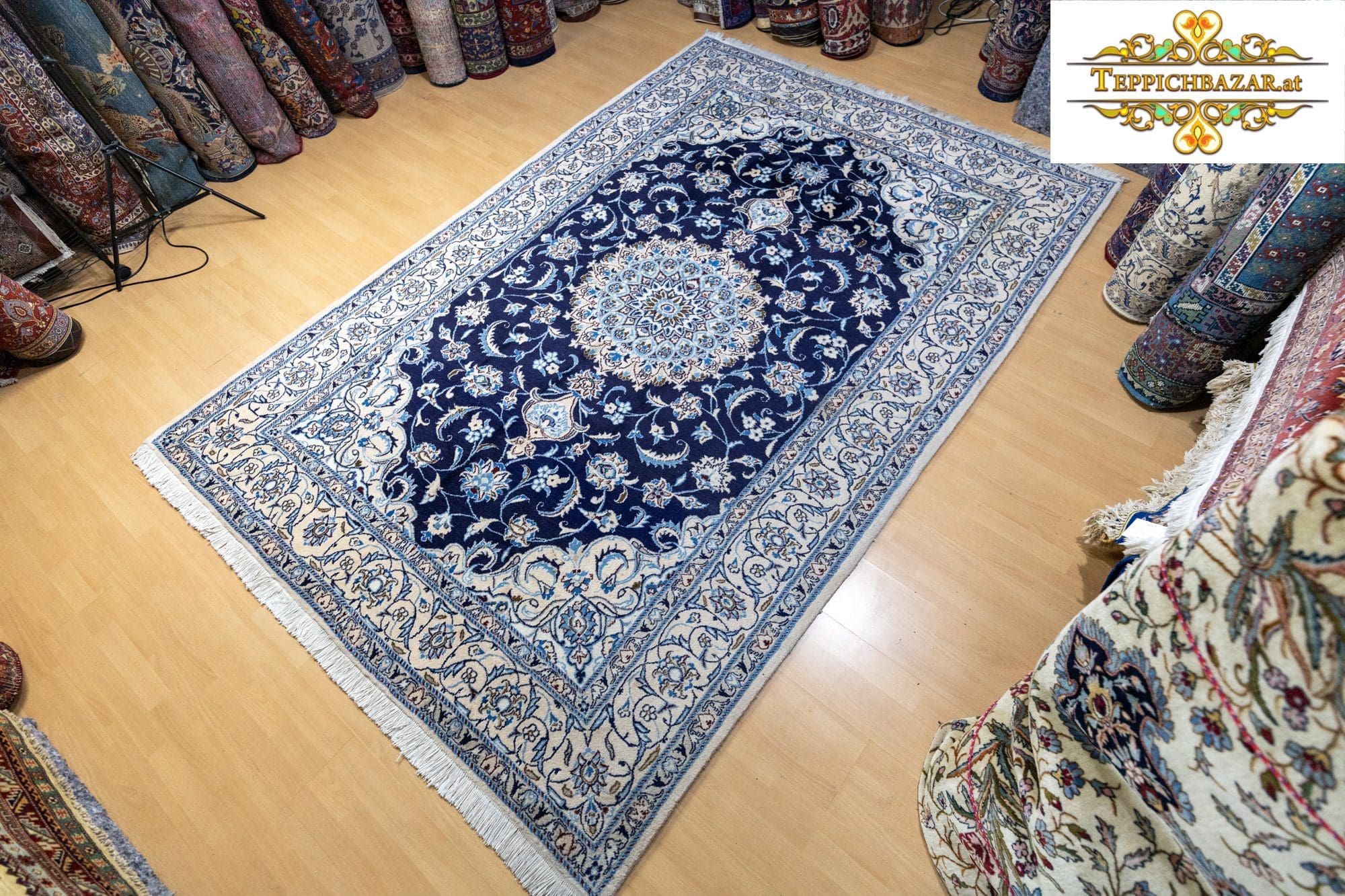
This Nain Persian rug is hand-knotted. The pile is made of 100% wool and silk, while the warp is 100% cotton. These details describe both the visible surface and the structural foundation of the textile. Wool has long been used in hand-knotted rugs because its fibres are resilient and flexible. It can be formed into a firm pile and accepts colour in an even manner. Silk can introduce a finer line and a different degree of lustre into the design. In this piece, silk is expressly listed as part of the pile. Cotton is identified as the warp material.
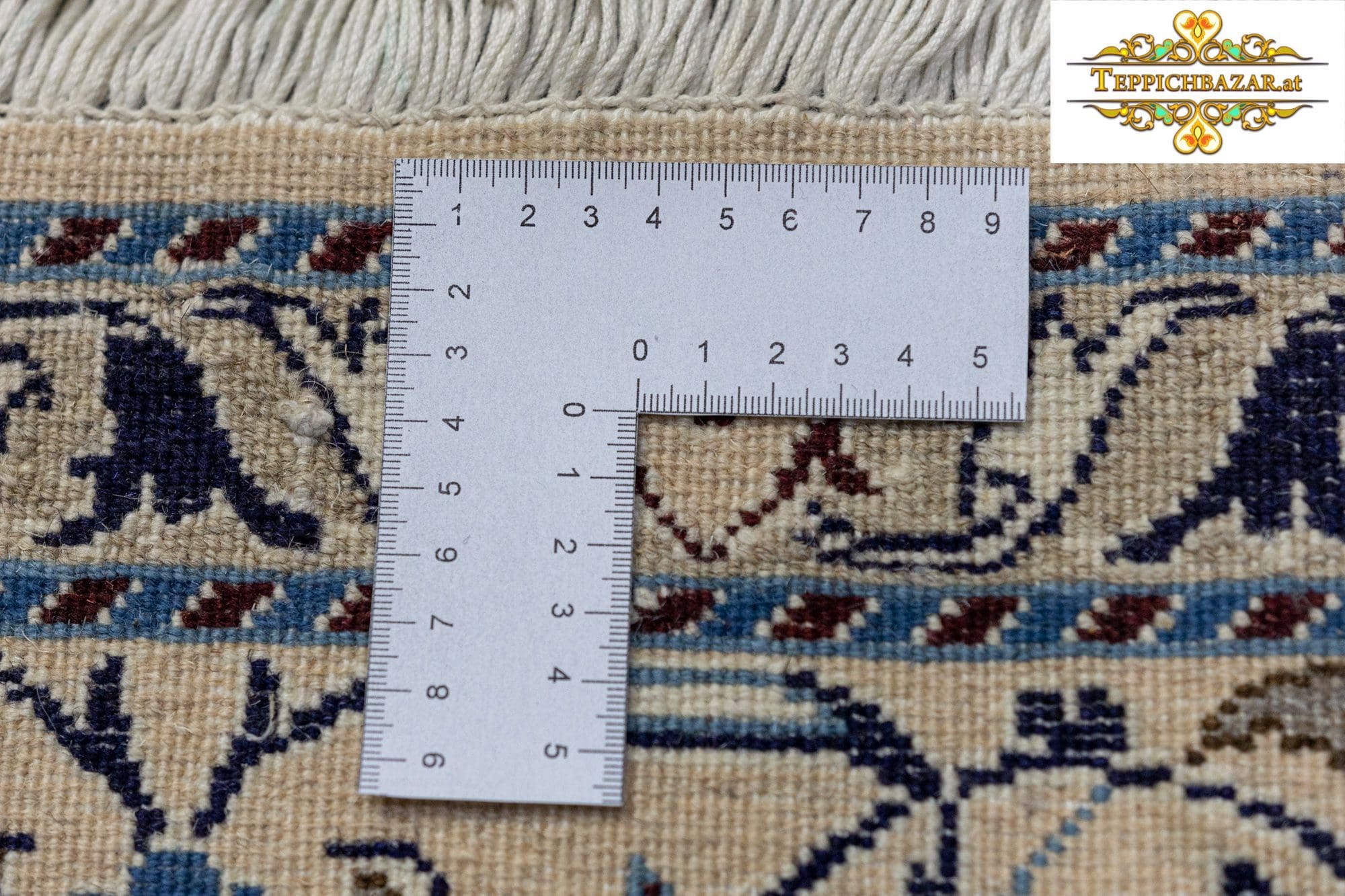
The knot density is recorded as 200000-250000/Qm 12La. The 12La designation belongs to the traditional classification of Nain rugs. In the source text, this term is connected with the structure of the warp and with knot density. Such a classification provides a shared technical vocabulary for discussing Nain weaving. It does not replace the individual facts about material, origin or condition. Here, the classification appears together with a wool-and-silk pile, a cotton warp and hand-knotted construction.
In hand-knotting, the pile is built knot by knot on the warp. Weft threads connect the rows and help stabilise the textile structure. The design is created by placing differently coloured yarns according to the intended composition. A floral medallion requires a coordinated arrangement of centre, vines, flowers and framing elements. The process therefore depends on controlled knotting and careful attention to the relationship between the various parts of the pattern. This technical foundation explains why material, knot density and design are commonly considered together when Nain rugs are discussed.
The condition of this example is described as very good. It has also been professionally washed. This is the recorded care information for the offered rug. It does not provide grounds for claims about repairs, restoration work or particular areas of wear, so those details are not added. The established facts are its very good condition, professional washing, stated materials and hand-knotted technique. A clear product description keeps these facts separate from general information about the Nain weaving tradition.
Origin and Tradition
This rug comes from the city of Nain in Persia. Nain is a small town with approximately 70,000 inhabitants, located about 140 kilometres east of Isfahan. The town has its own Persian rug tradition, recognised in the source text through its fine classifications, ordered compositions and distinctive approach to knot density. Nain rugs are described through both their regional origin and their technical execution. The origin statement city of Nain, Persia applies to this individual rug and should not be confused with places mentioned in connection with the broader distribution of Nain designs.
The principal Nain classifications named in the source are 4La, 6La, 9La and 12La. The number before “La” refers to the number of individual yarns from which the warp is made. “La” means a layer of yarn. This system links the construction of the warp with fineness and knot density. Within the traditional scale, a lower number is associated with higher quality and a more complex rug. The terms are therefore technical descriptions within the Nain tradition rather than merely decorative labels. They help explain how Nain rugs are compared with one another.
The source describes a 9La rug as having a density of 400,000 to 550,000 knots per square metre. It describes 4La as exceeding one million knots per square metre, with this quality produced only rarely and considered particularly interesting to collectors. Together with Isfahan rugs, this quality is described as one of the finest Persian rug qualities. These general figures explain the logic of the Nain scale. They are not the density of this particular rug. The piece itself is identified as 12La, and its own density is stated separately in the product information.
For this rug, the recorded knot density is 200000-250000/Qm and the classification is 12La. The source places 12La within the sequence of Nain classifications and also states that Nain rugs are generally considered to be of good quality. The classification therefore offers a differentiated way of discussing construction within an established regional tradition. It does not replace the origin statement and does not turn a Nain rug into a rug from another Persian centre. The named provenance remains the city of Nain in Persia.
The source text also connects Nain patterns with the north-eastern Persian city of Kashmar in the Khorasan region. This is information about the circulation and use of Nain patterns, not a different provenance for this individual rug. In the history of weaving, a place of origin and the later development or use of a design can be related while remaining separate facts. For this piece, Nain is the named origin. Isfahan is mentioned as a nearby and important Persian rug region, and the source compares the quality of Nain rugs with that of Isfahan rugs. Nain nevertheless retains its own classification and design tradition.
Regional rug traditions are often understood through several layers at once: the town where a rug is identified as originating, the structure of the weave, and the visual language of its pattern. In Nain, the La system gives the technical discussion a particularly clear framework. The tradition can therefore be described without reducing it to a single feature. The origin identifies the regional context, the warp classification addresses construction, and the design shows how floral and medallion forms are organised. These general relationships provide background for this rug without adding unrecorded details to it.
Design and Pattern
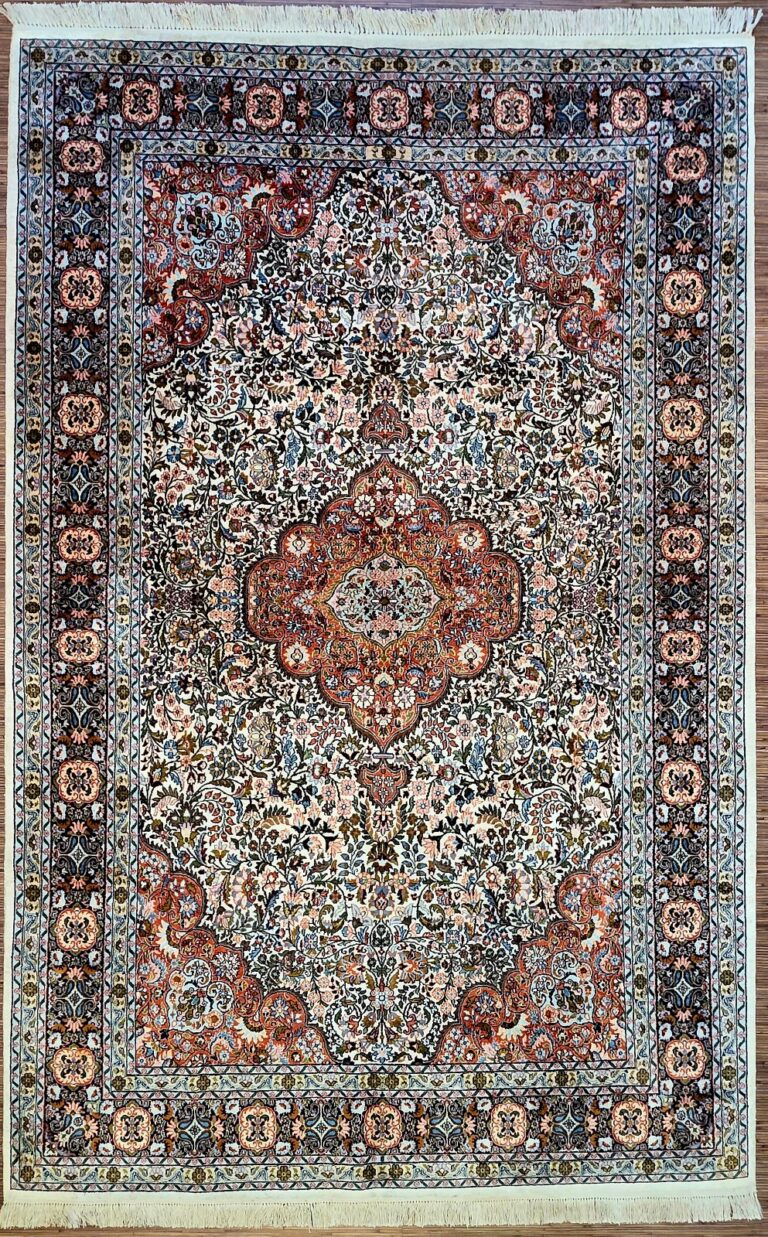
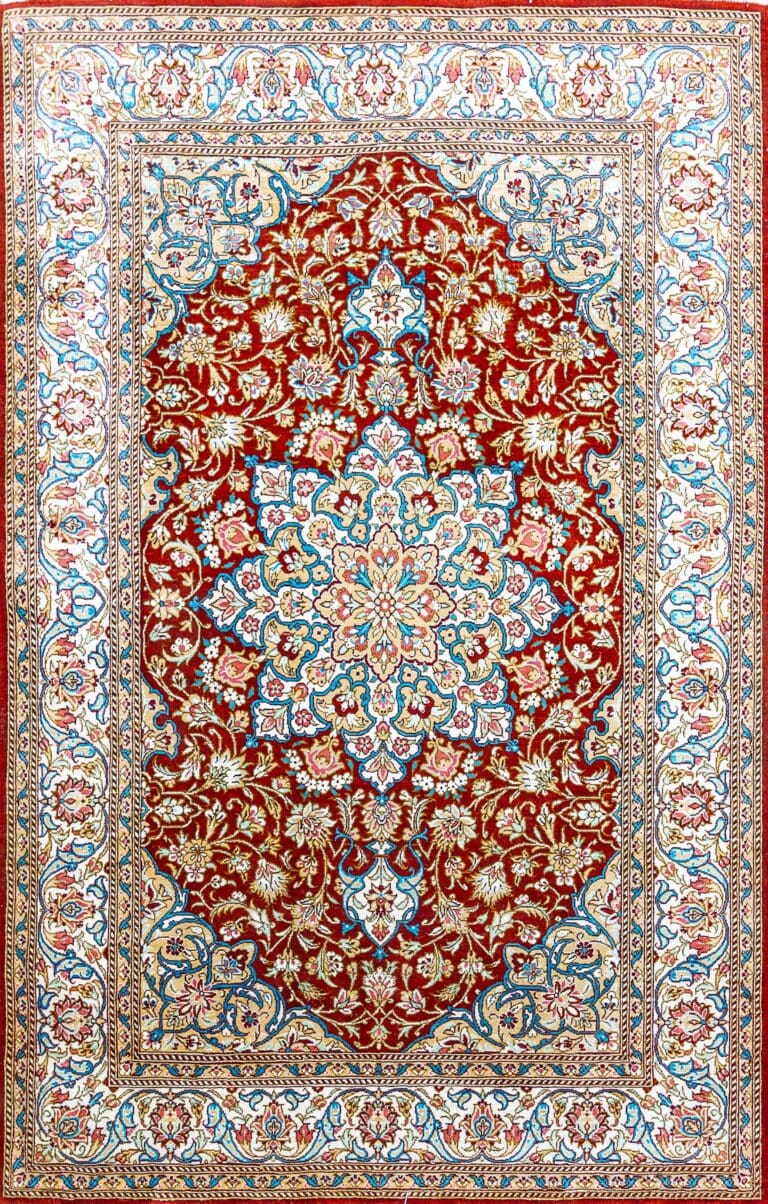
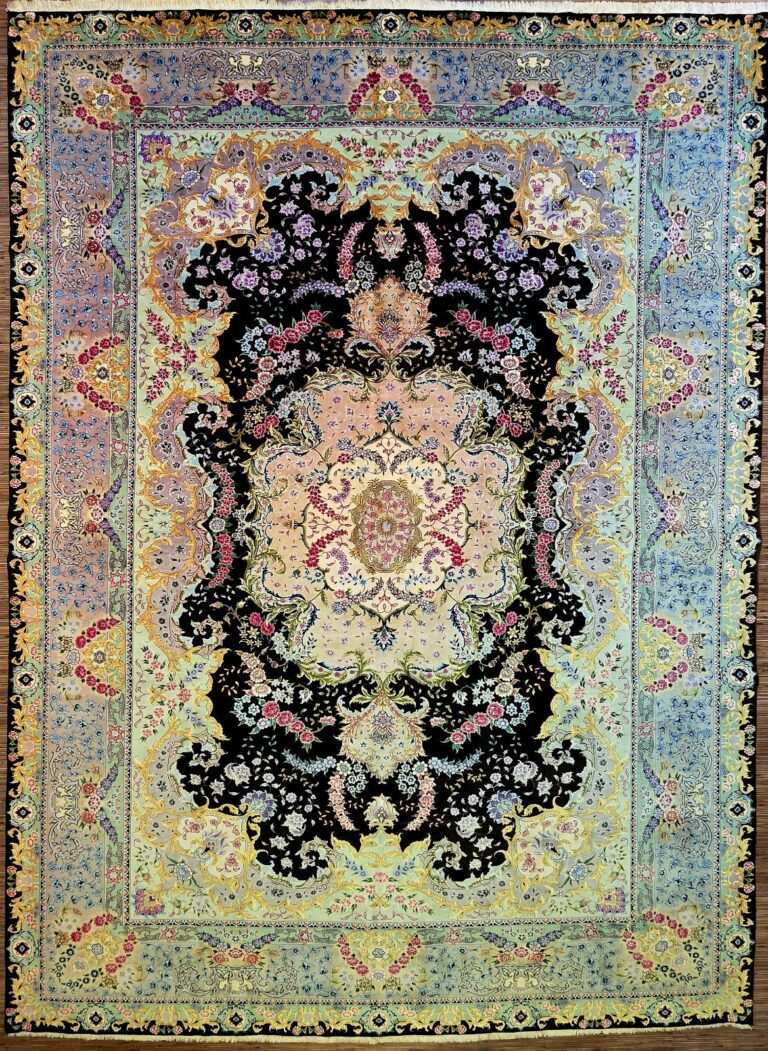
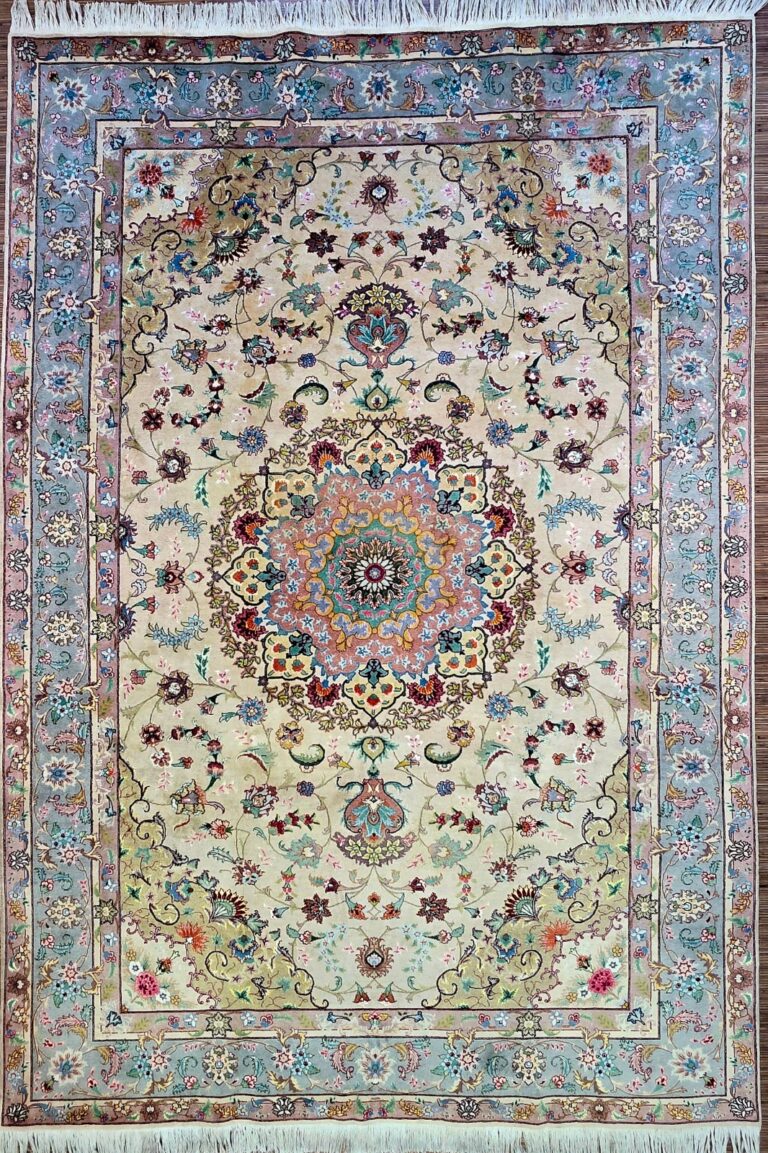
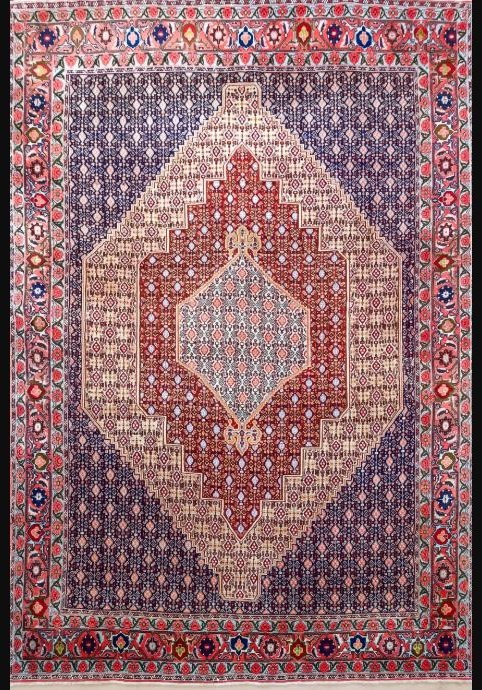
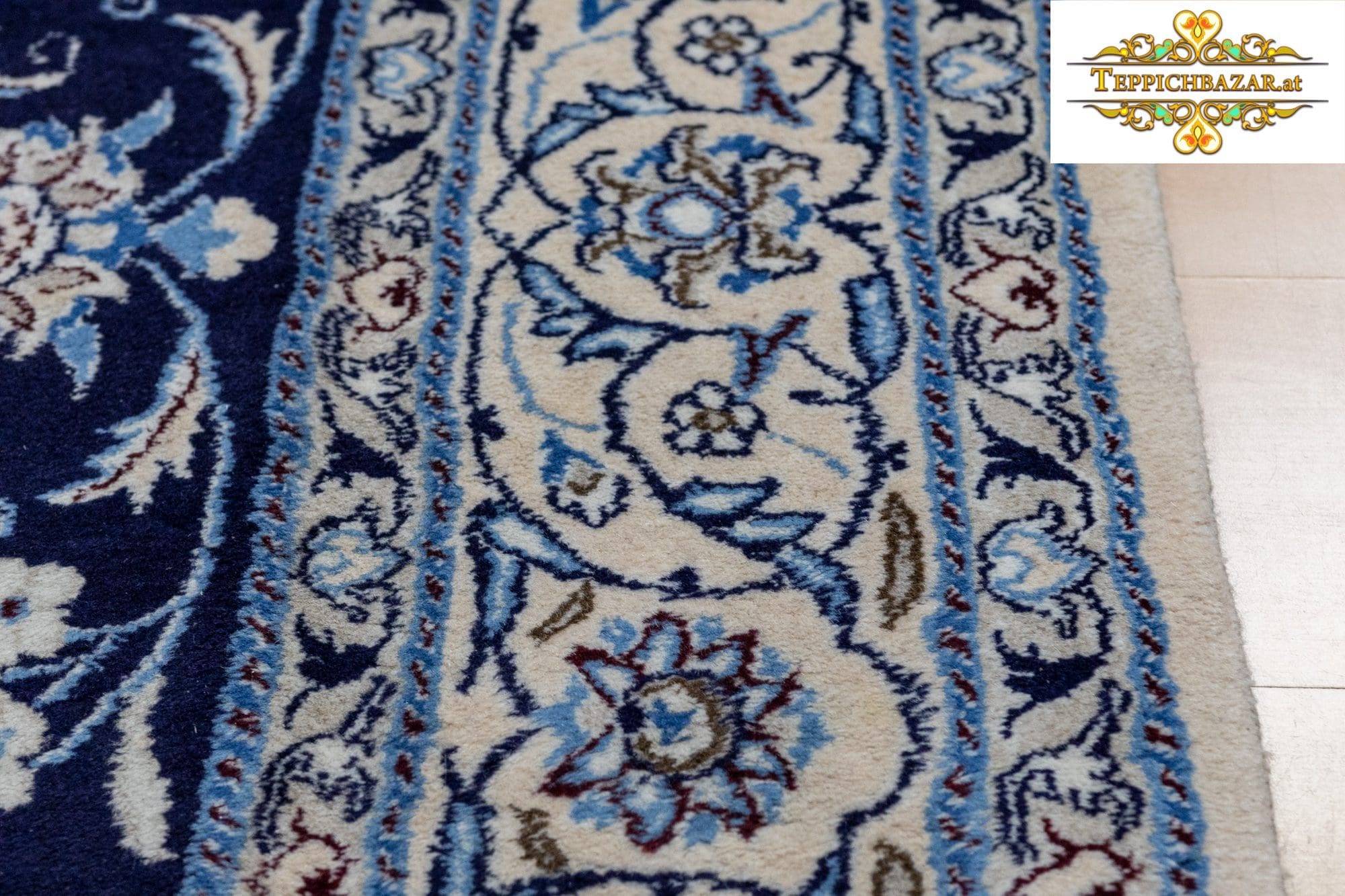
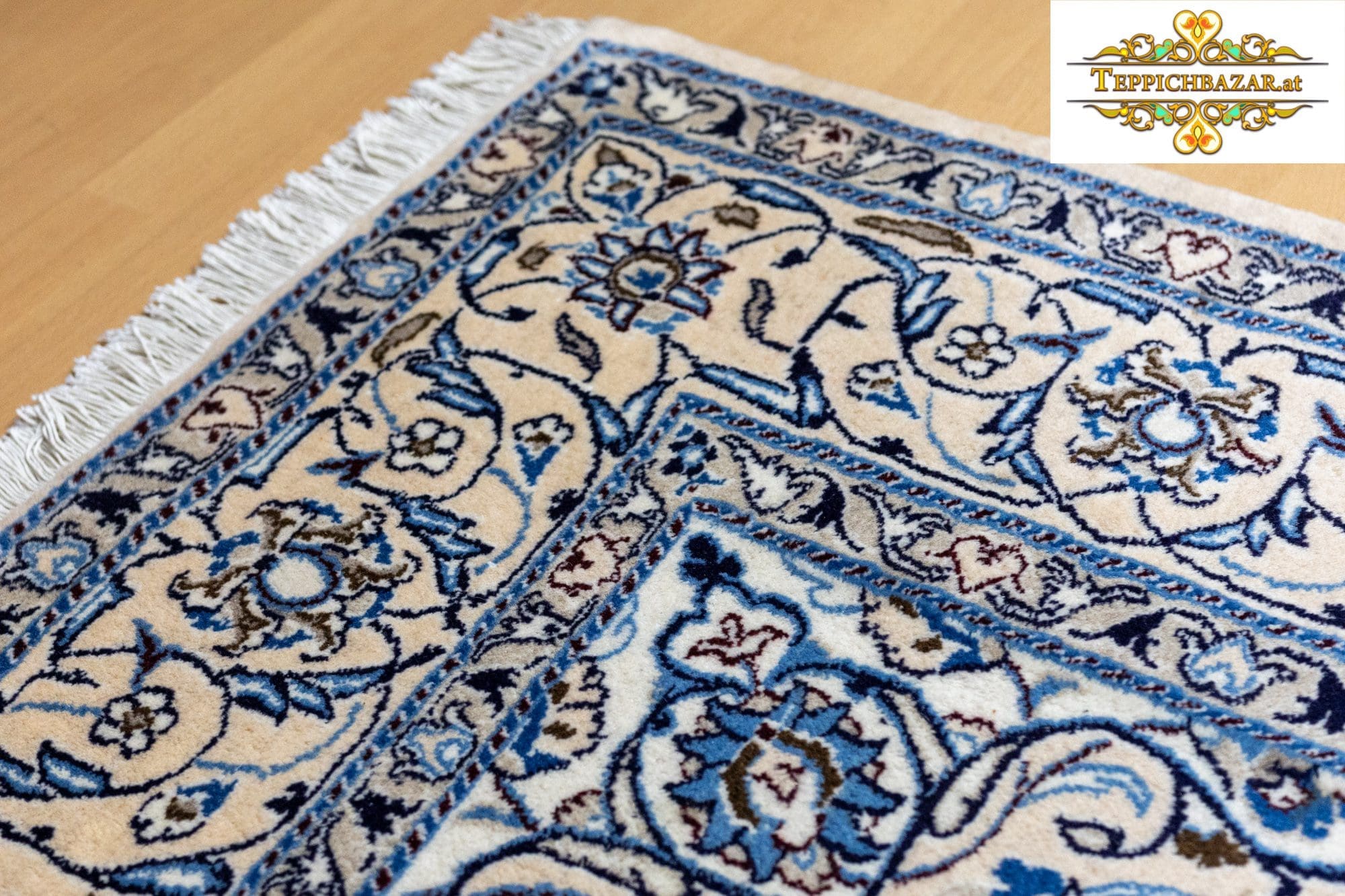
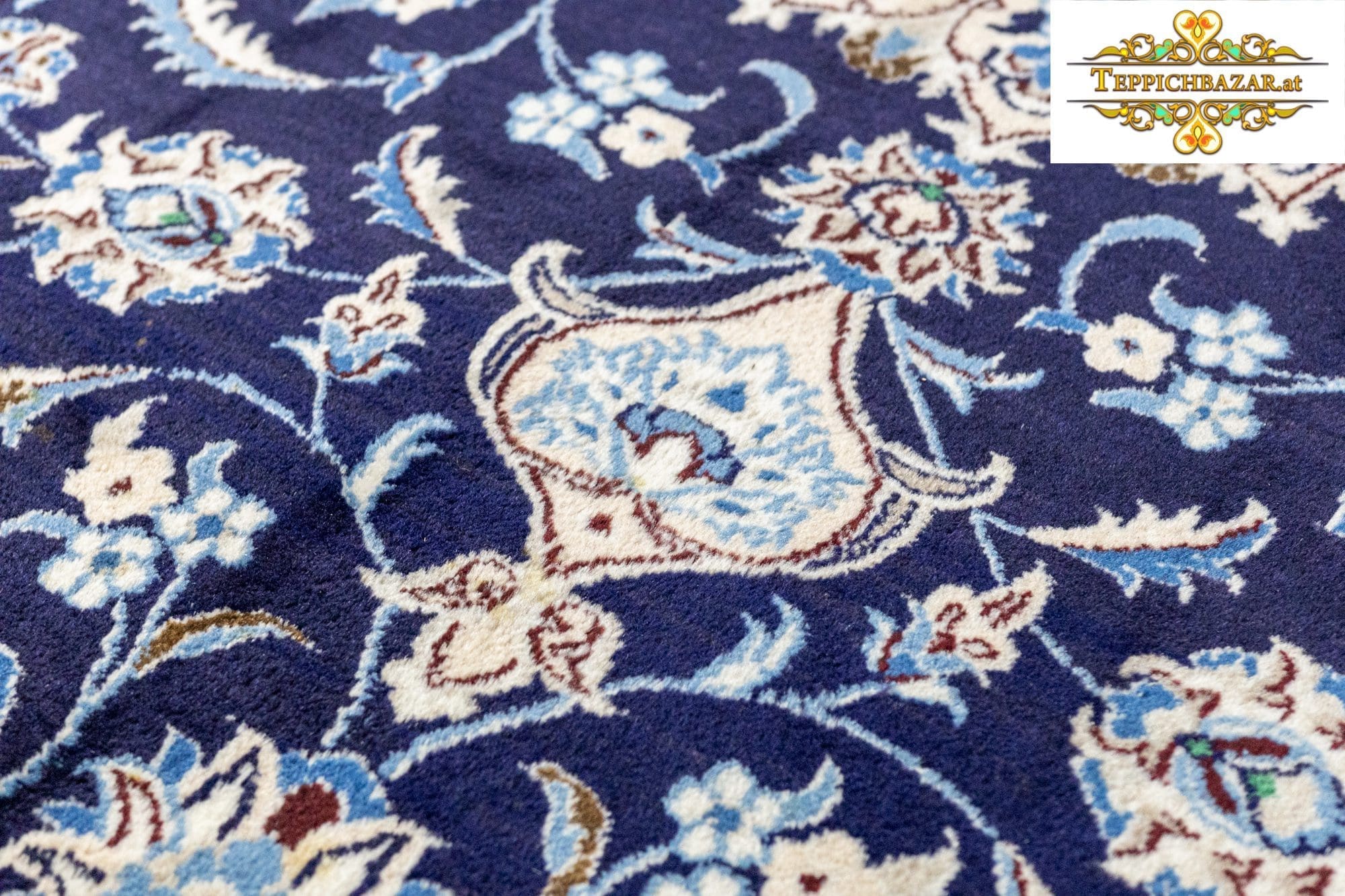
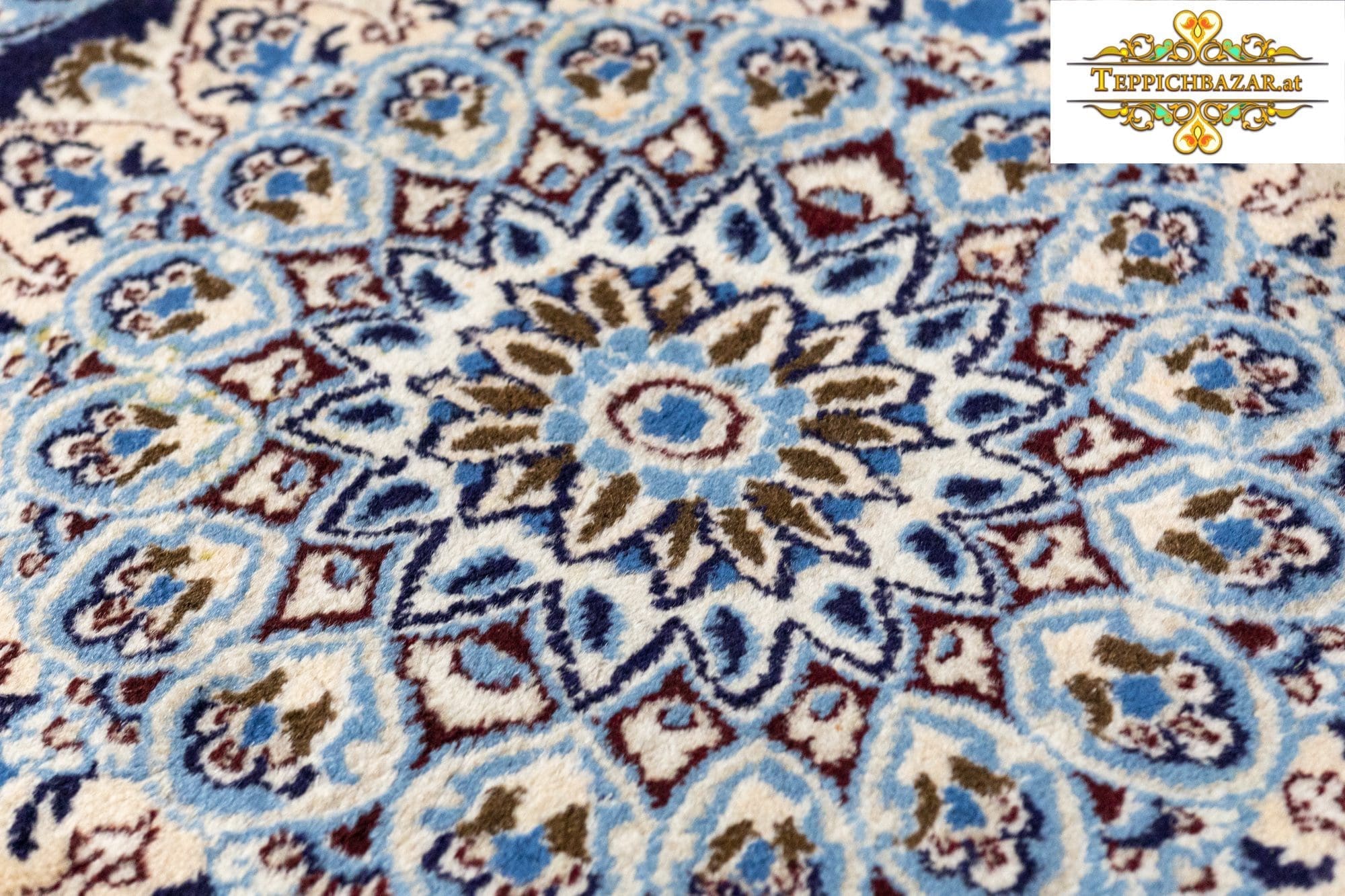
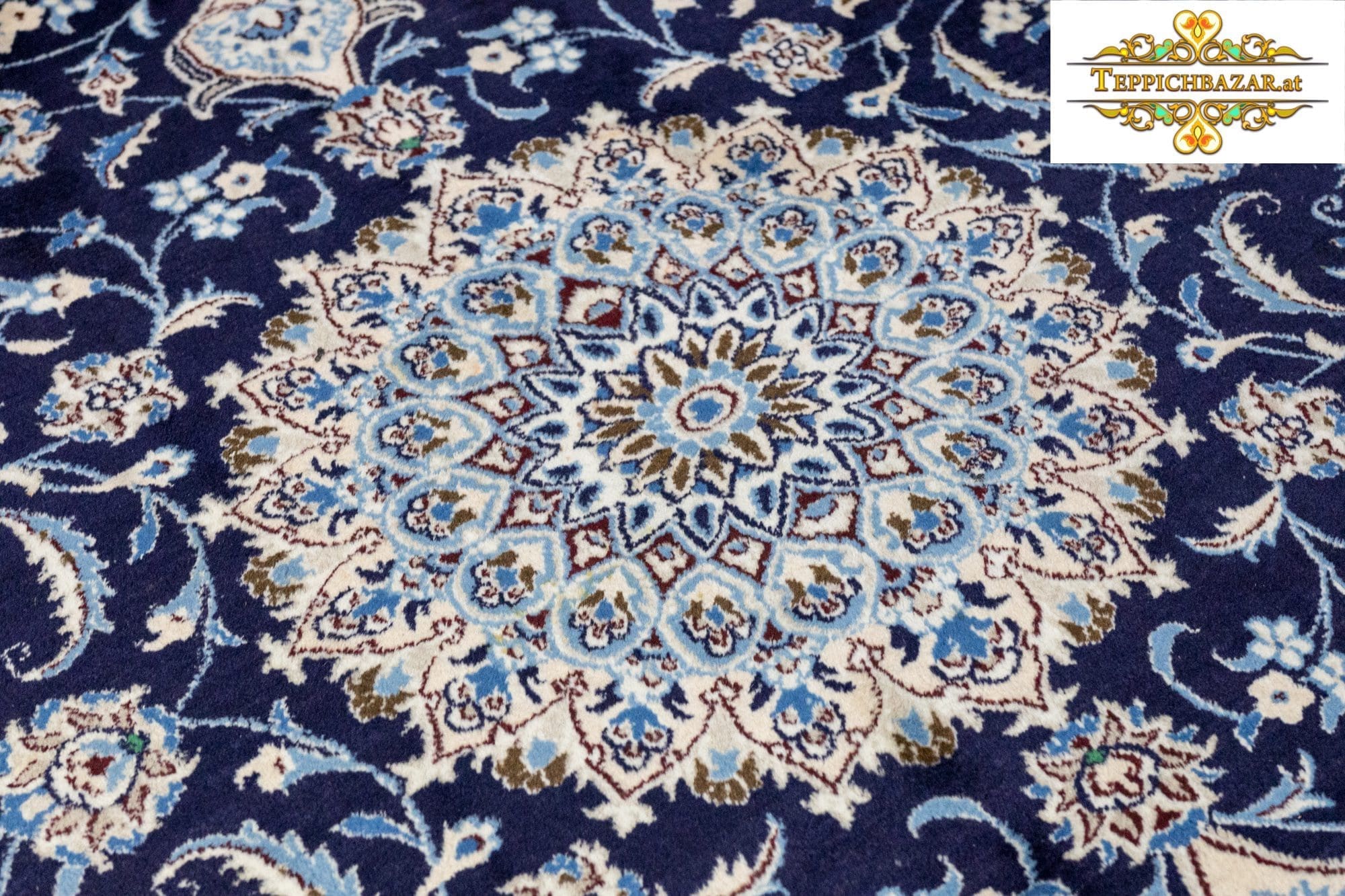
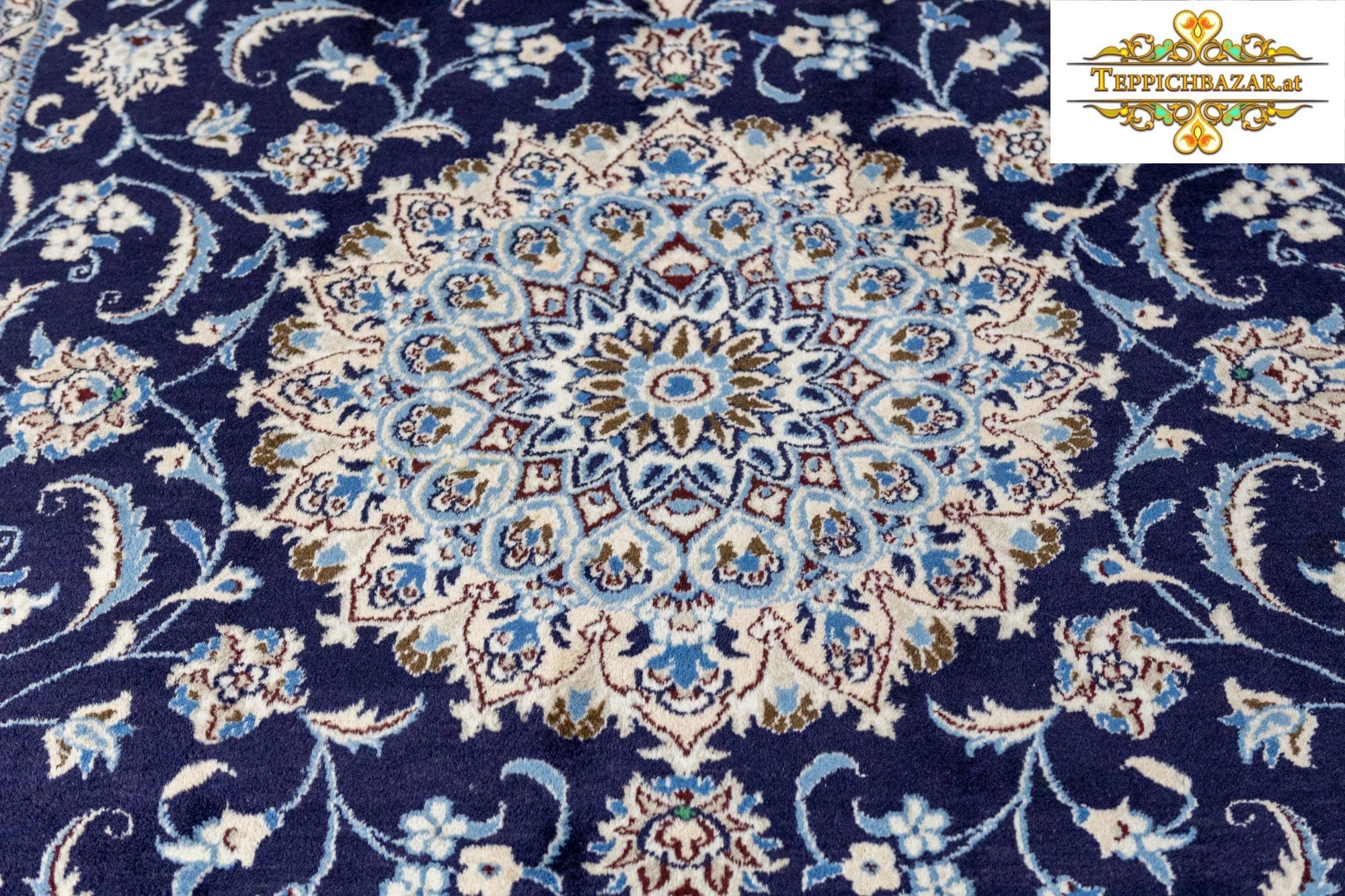
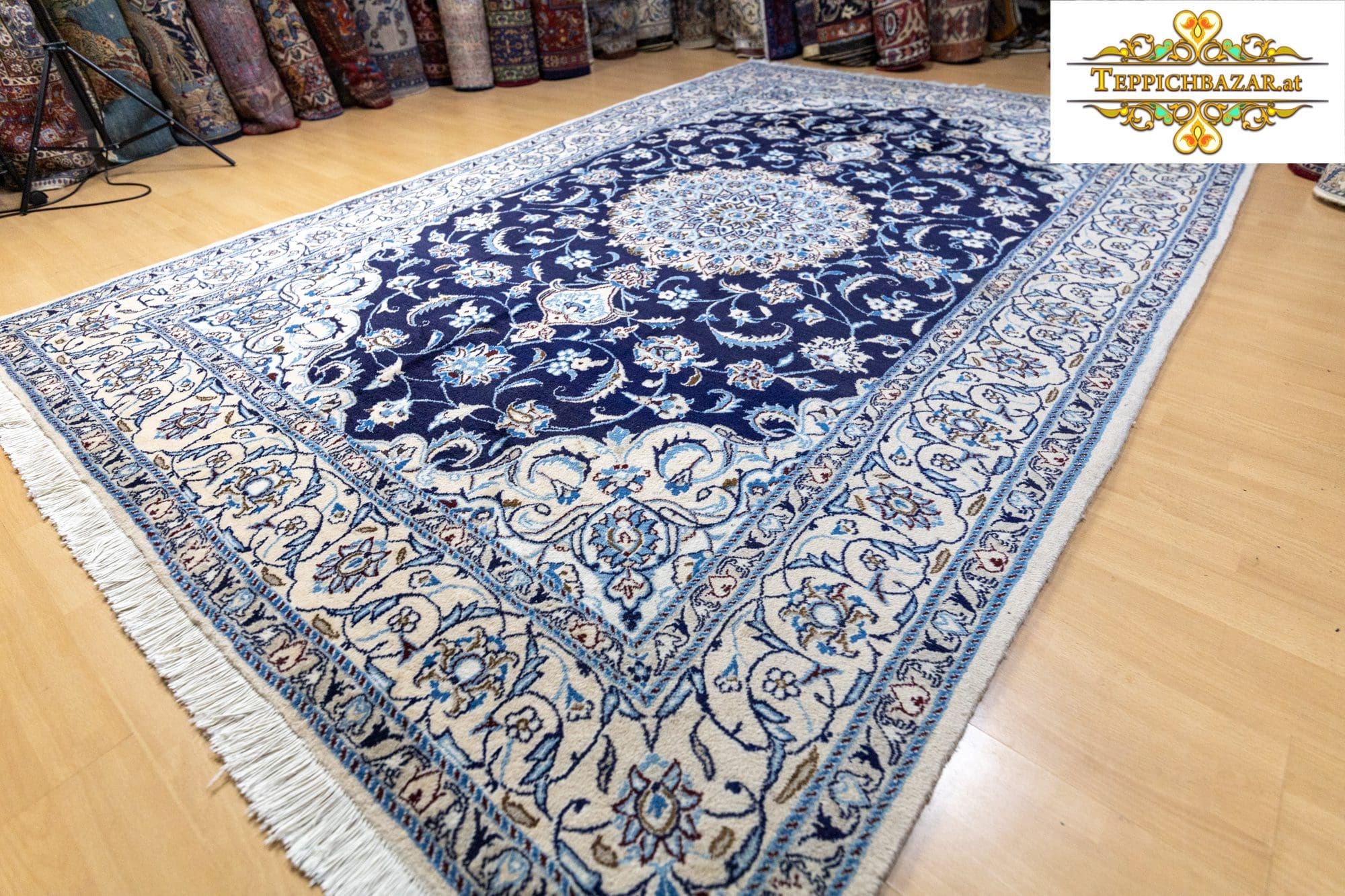
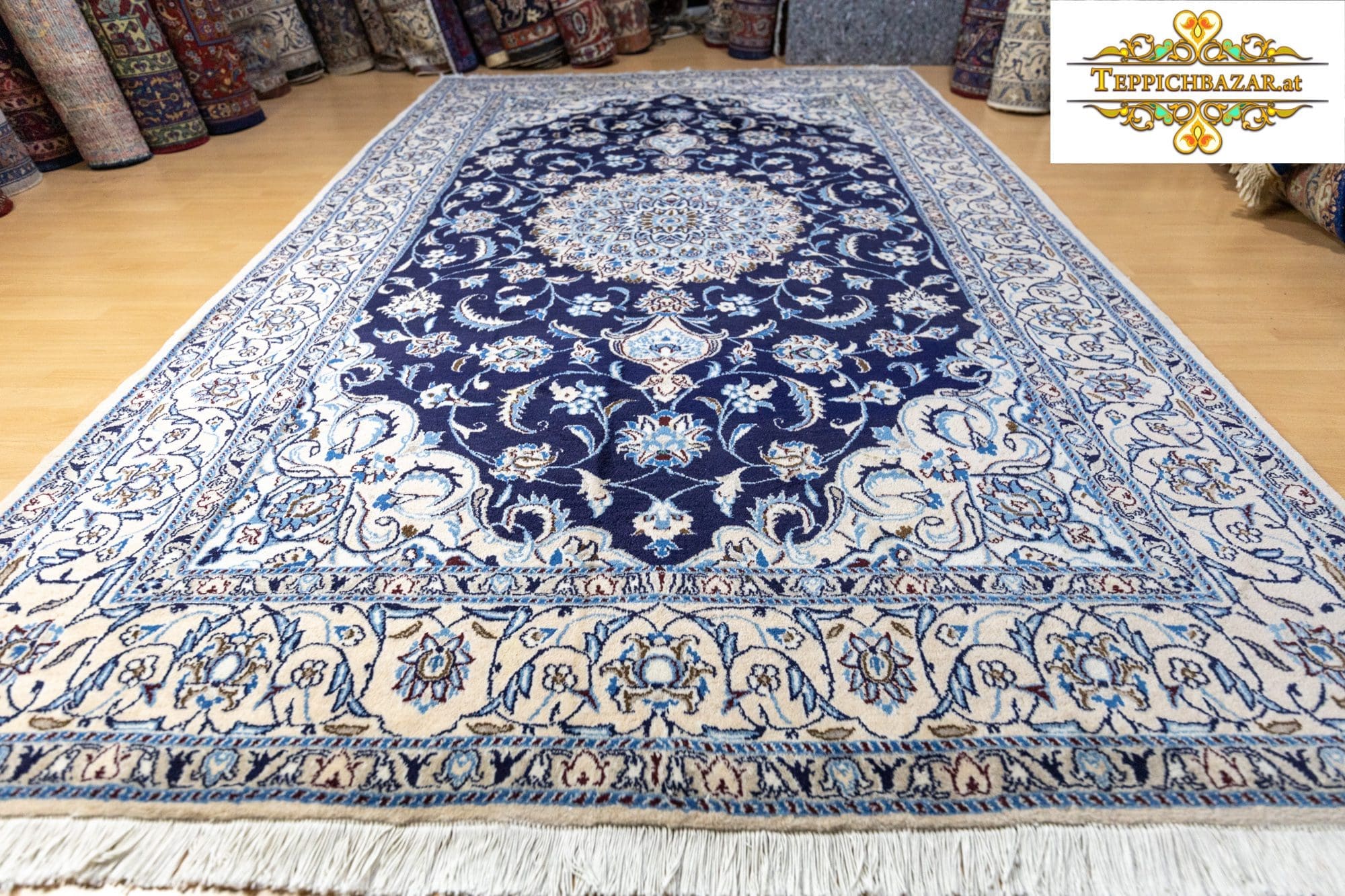
The pattern of this rug is recorded as “Nain Floral Medallion.” Its central element is a medallion surrounded and decorated with flowers and arabesques. A medallion composition organises the design around a distinct centre. Floral motifs enliven the surrounding areas, while arabesques bring flowing, interlaced lines into the ornament. This combination belongs to the formal Persian design vocabulary associated with Nain patterns. The specific name for this piece remains Nain Floral Medallion. No additional colour information or complete list of secondary motifs is provided.
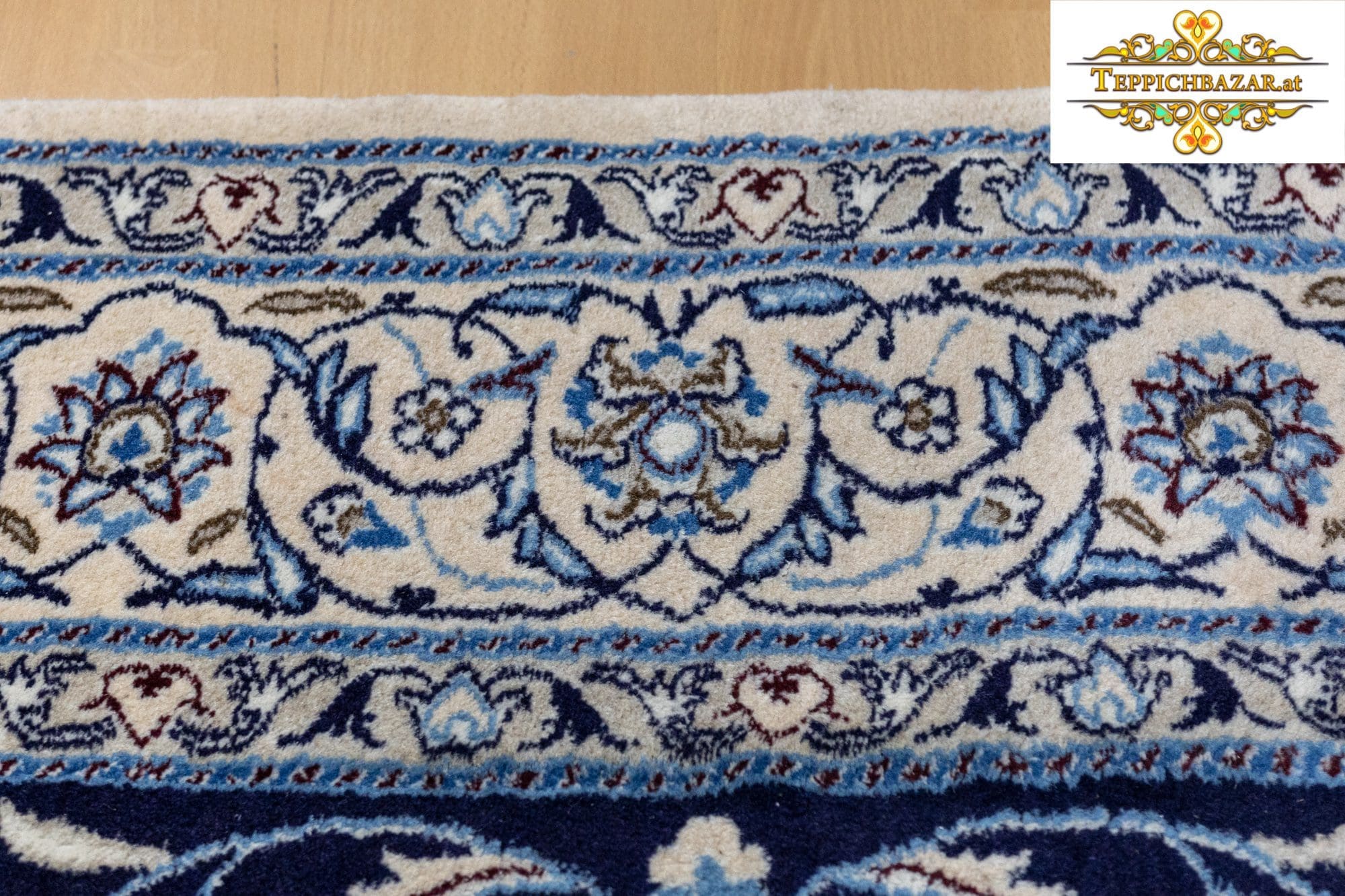
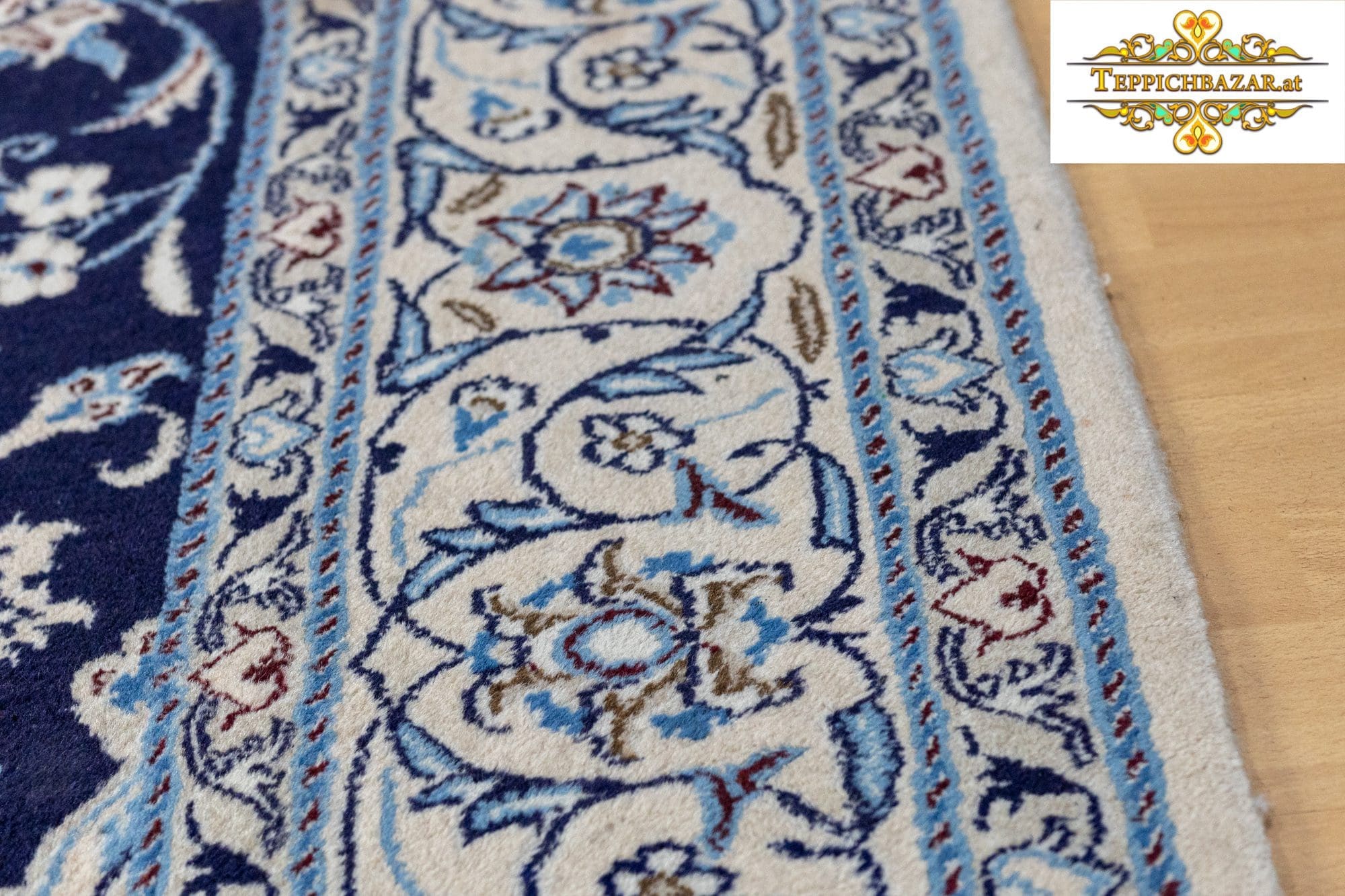
A medallion creates a visual centre that establishes the basic order of the field. Flowers and arabesques can lead the eye outward from the centre and connect the internal areas with the surrounding frame. A border gives the composition a concluding edge and separates the central design from the outside. The source expressly states that the borders are decorated with silk. This makes material part of the pattern description. Silk can be used to support finely drawn decorative details, while the wool-and-silk pile forms the textile surface. The border decoration is the stated feature; no specific border sequence is attributed to the rug.
The design is described as very oriental. In this context, the term refers to an ornamental vocabulary organised around a central medallion and enriched with floral and arabesque drawing. The character of such a composition comes from the relationship between centre, field and framing elements rather than from the medallion alone. Hand-knotting translates the design into individual knots, so the pattern is created through the weaver’s work instead of industrial repetition. The actual rug remains defined by the recorded Nain Floral Medallion pattern. No unstated palette or additional ornament is assigned to it.
The La classification also explains why technique and design are often discussed together for Nain rugs. The source describes lower La numbers as corresponding to finer and more complex work. A finer knotting structure can generally support smaller floral details and more differentiated curved lines because the drawing is built from many individual knots. This is background about the weaving type, not an additional claim about an unrecorded detail in this rug. The confirmed design information is limited to the Nain floral medallion, the central medallion, flowers, arabesques and silk-decorated borders.
“Floral Medallion” names the governing arrangement rather than describing every small field element. It identifies the central form and the botanical ornament that surrounds it. A precise catalogue description therefore remains with the features expressly given. For this piece, those features are its Nain attribution, central medallion, flowers, arabesques and silk decoration at the borders. The design can be understood as part of the broader Nain tradition while still being treated as the pattern of one individual rug. Exact colours, minor motifs and the full border sequence are not specified.
Special Features
The recorded special features of this one-off rug include its 12La classification, its knot density of 200000-250000/Qm, its pile of 100% wool and silk, and its warp of 100% cotton. It is identified as originating in the city of Nain in Persia and carries a Nain Floral Medallion pattern. The borders are decorated with silk. The condition is described as very good, and the rug has been professionally washed. Together, the regional classification, the medallion composition, the stated materials, the hand-knotted technique and the care information form the essential profile of this sold Nain Persian rug.
FAQ
How is the quality of a Persian rug determined?
The quality of a Persian rug is determined by several factors. These include knot density per square metre, the type and fineness of the materials, the complexity of the design and the skill of the craftsperson. Wool and silk can serve different purposes in the pile and influence the way fine ornament is rendered. Colour and pattern are also important, as are age and condition. Originality, style, aesthetic character and the creativity of the design contribute to the assessment. Rarity, supply and demand affect market value as well. For Nain rugs, the 4La, 6La, 9La and 12La system provides an additional regional reference. This rug is identified as 12La.
What features distinguish a hand-knotted rug from a machine-made rug?
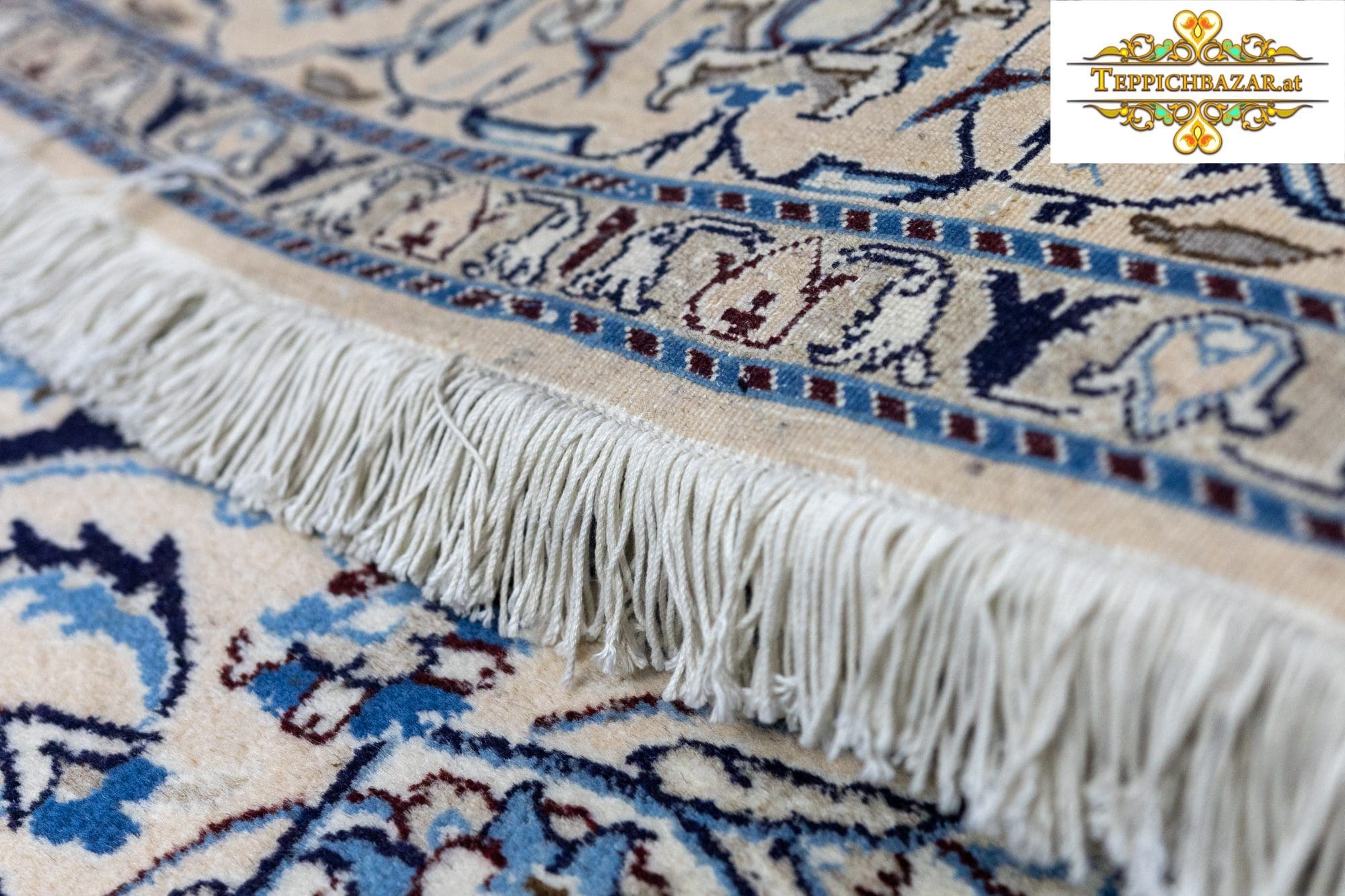
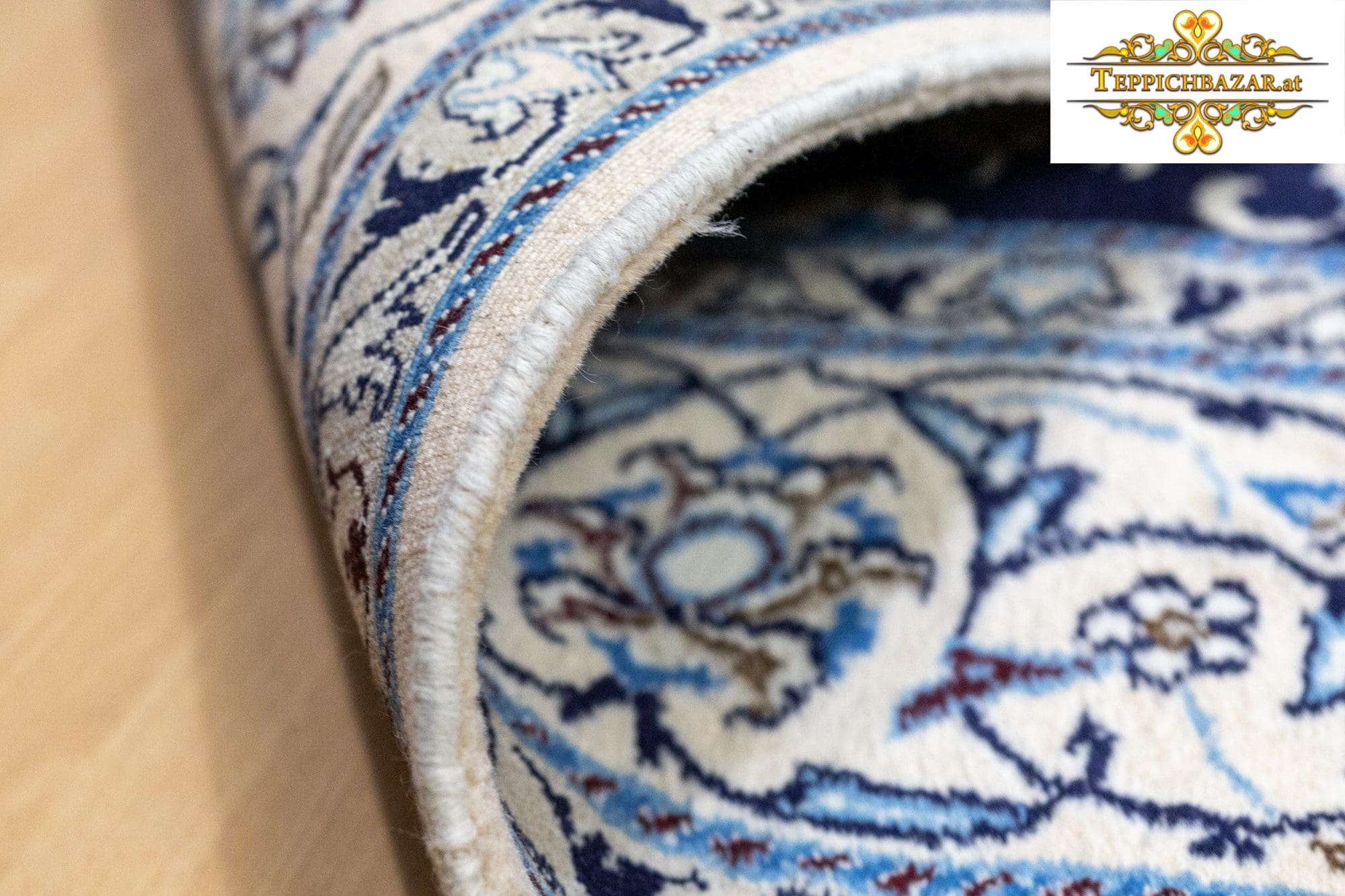
A hand-knotted rug is made by tying knots by hand on a loom. Its fringes are extensions of the warp rather than pieces sewn onto the finished rug. The selvedge is the outer long side and is formed through the handling and securing of the weft at the edge. On a hand-made rug, this edge is sewn by hand and can therefore be somewhat uneven or not perfectly straight. The back is another useful point of inspection because the individual hand-tied knots can be seen there. A machine-made rug is produced on an automated, computer-controlled loom. Its edges are usually very regular, and its pattern is often precisely mirrored from one side to the other.
What does 12La mean in a Nain rug?
12La is a term from the traditional Nain classification. The number before “La” refers to the number of individual yarns used to form the warp, while “La” means a layer of yarn. Nain rugs are classified in groups including 4La, 6La, 9La and 12La. The system is connected with knot density and the fineness of the execution. Within this classification, a lower number is associated with higher quality and a more complex rug. The source describes 9La with 400,000 to 550,000 knots per square metre and 4La as exceeding one million knots per square metre. This rug is specifically identified as 12La.
To provide the best experiences, we use technologies like cookies to store and/or access device information. Consenting to these technologies will allow us to process data such as browsing behavior or unique IDs on this site. Not consenting or withdrawing consent, may adversely affect certain features and functions.
Functional Immer aktiv
The technical storage or access is strictly necessary for the legitimate purpose of enabling the use of a specific service explicitly requested by the subscriber or user, or for the sole purpose of carrying out the transmission of a communication over an electronic communications network.
Preferences
The technical storage or access is necessary for the legitimate purpose of storing preferences that are not requested by the subscriber or user.
Statistics
The technical storage or access that is used exclusively for statistical purposes.The technical storage or access that is used exclusively for anonymous statistical purposes. Without a subpoena, voluntary compliance on the part of your Internet Service Provider, or additional records from a third party, information stored or retrieved for this purpose alone cannot usually be used to identify you.
Marketing
The technical storage or access is required to create user profiles to send advertising, or to track the user on a website or across several websites for similar marketing purposes.
Hallo! Suchen Sie einen bestimmten Teppich oder haben Sie Fragen zu Herkunft, Qualität, Größe oder Preis? Ich berate Sie gerne persönlich – kostenlos und unverbindlich.
Nicht gefunden, was Sie suchen? Über unser Netzwerk finden wir Ihren Wunschteppich – mit weltweitem Versand.
Abonnieren Sie unseren Newsletter und erhalten Sie unser Lexikon gratis als PDF: die Geschichte der Perserteppiche, historische Quellen, Knoten, Regionen und Motive. Oder folgen Sie uns auf Instagram, YouTube und TikTok.
 SICHERE ZAHLUNG
 VERSANDPARTNER