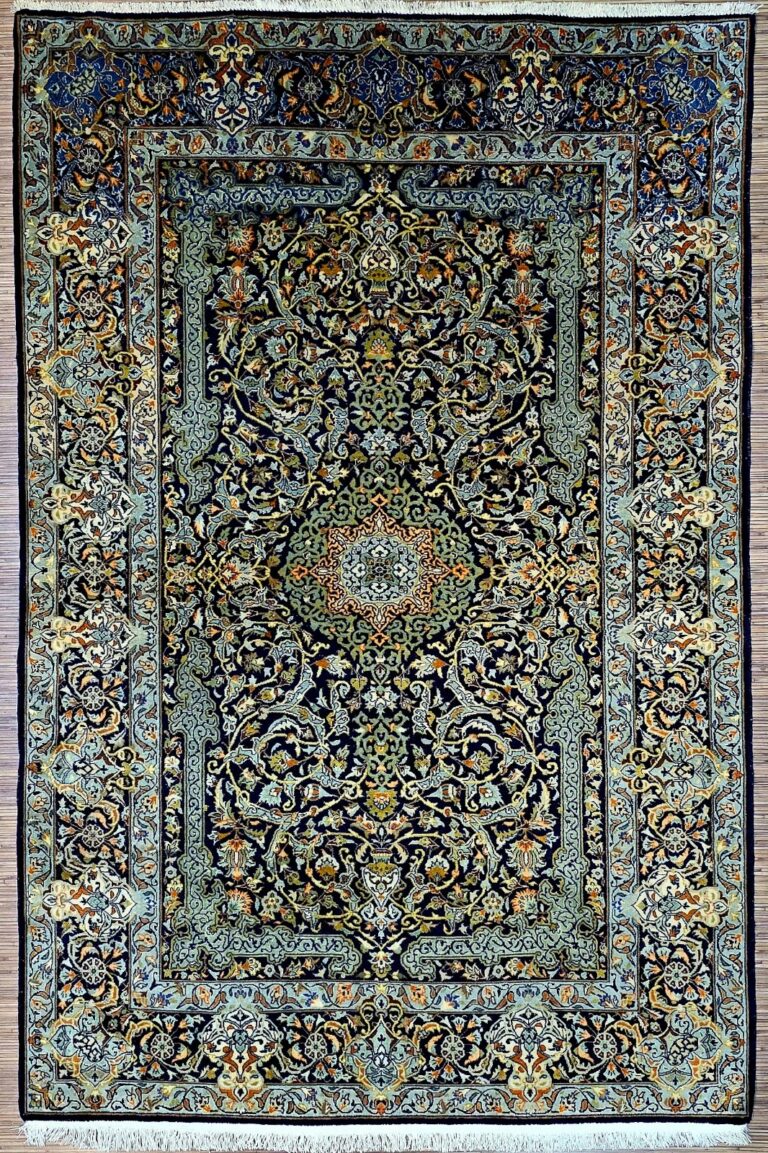
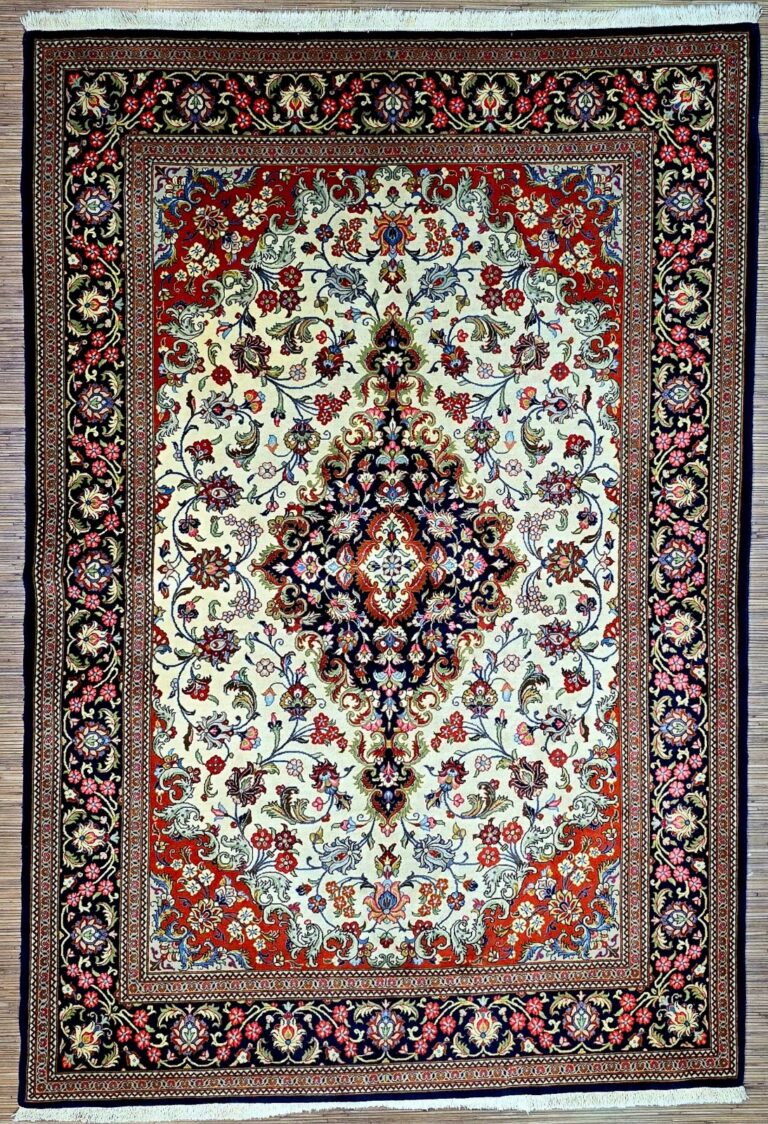
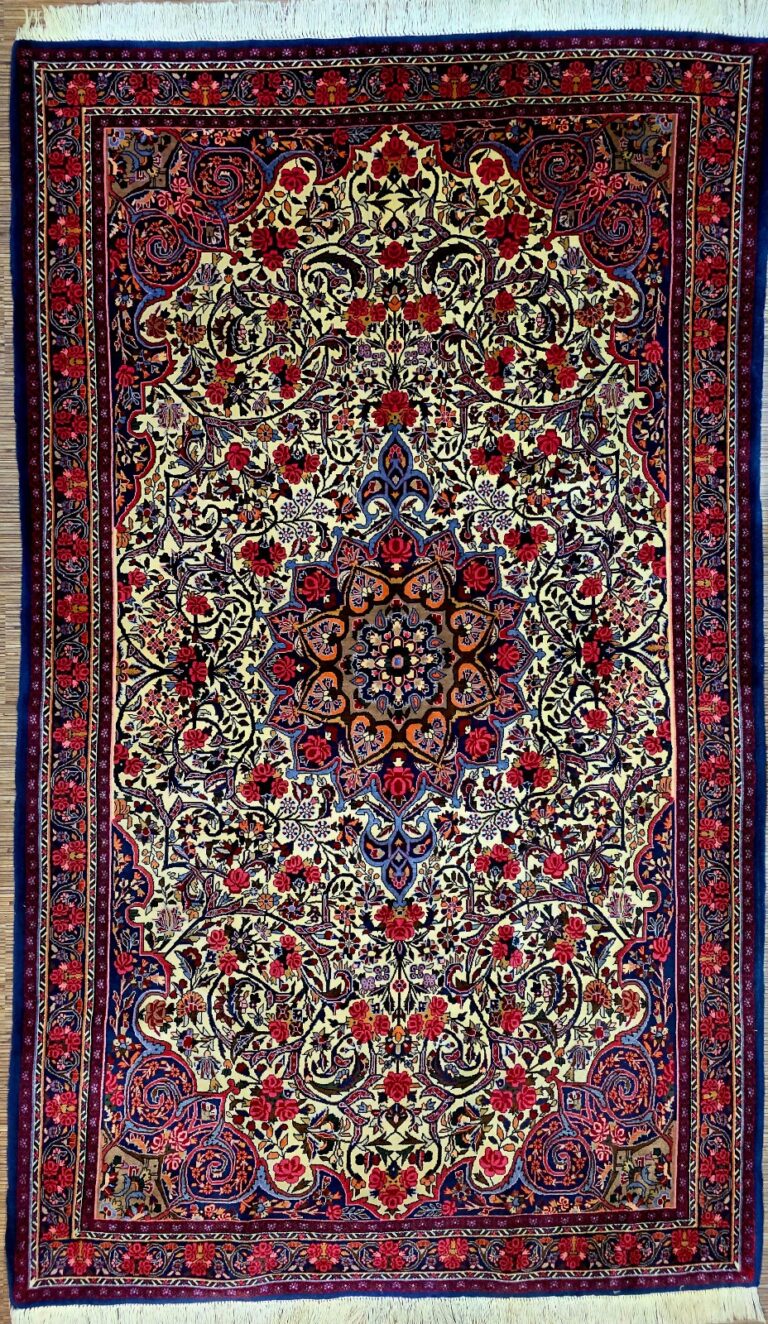
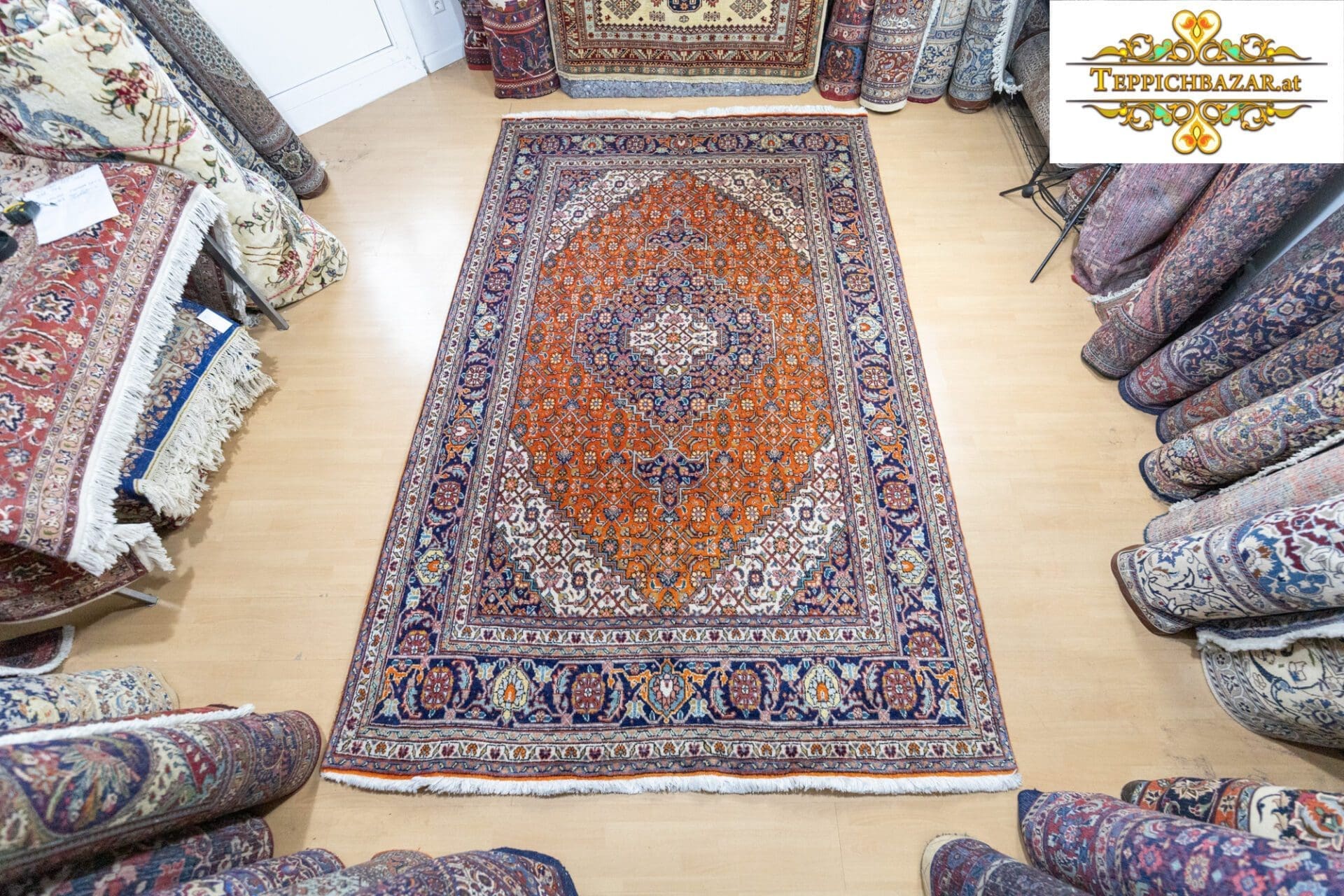
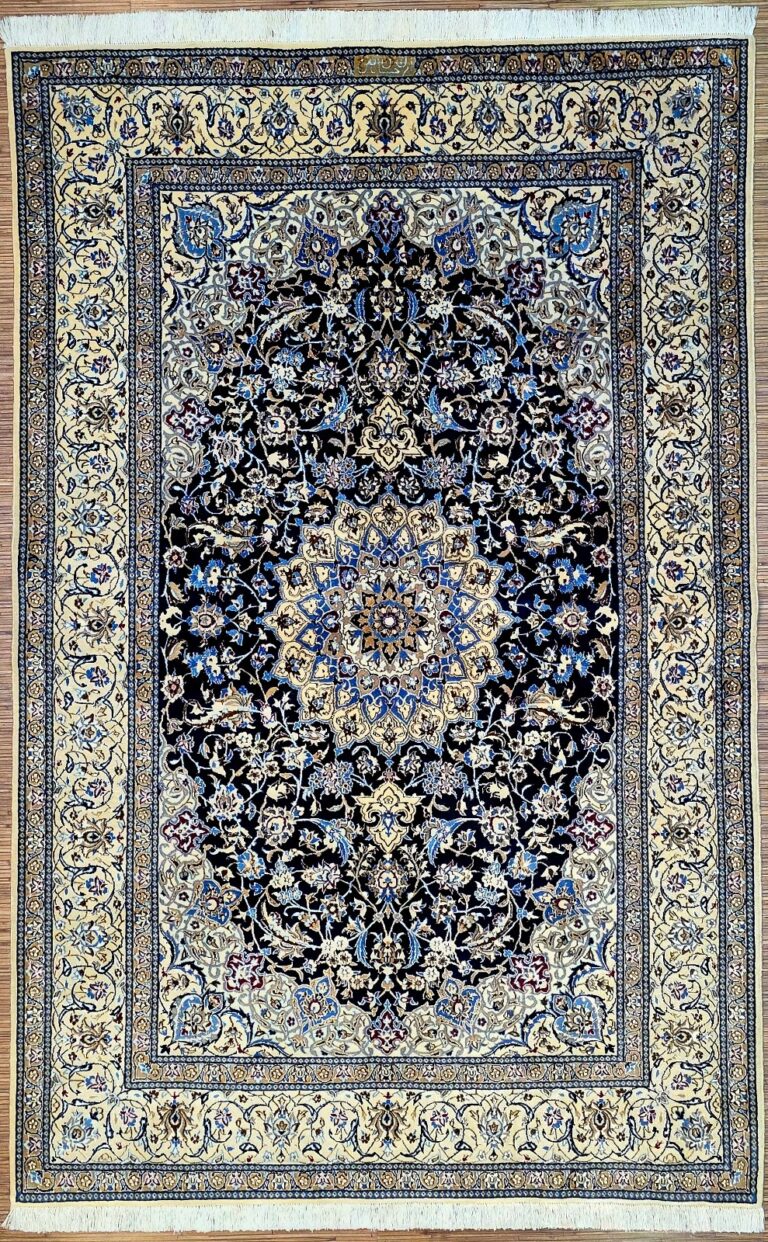
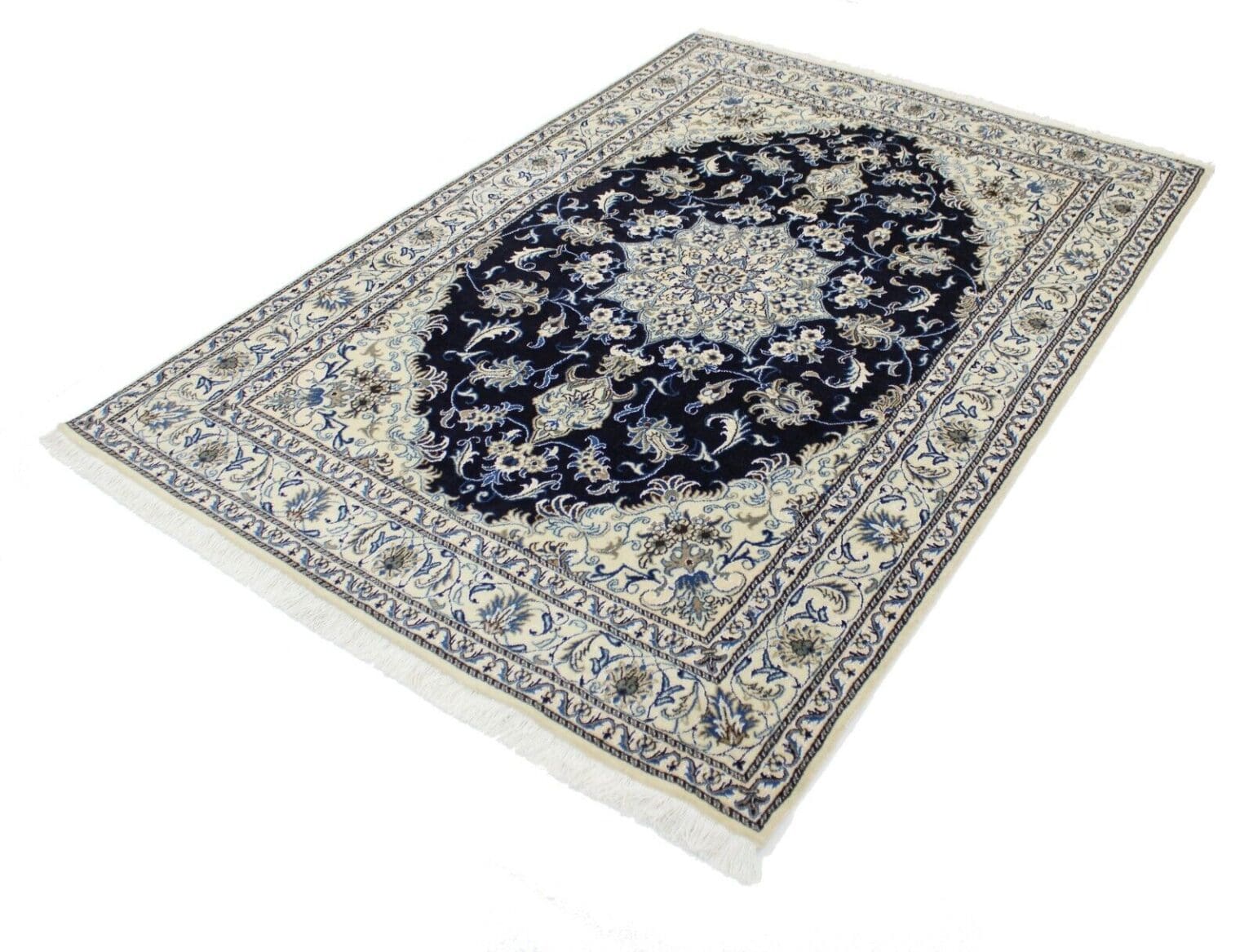
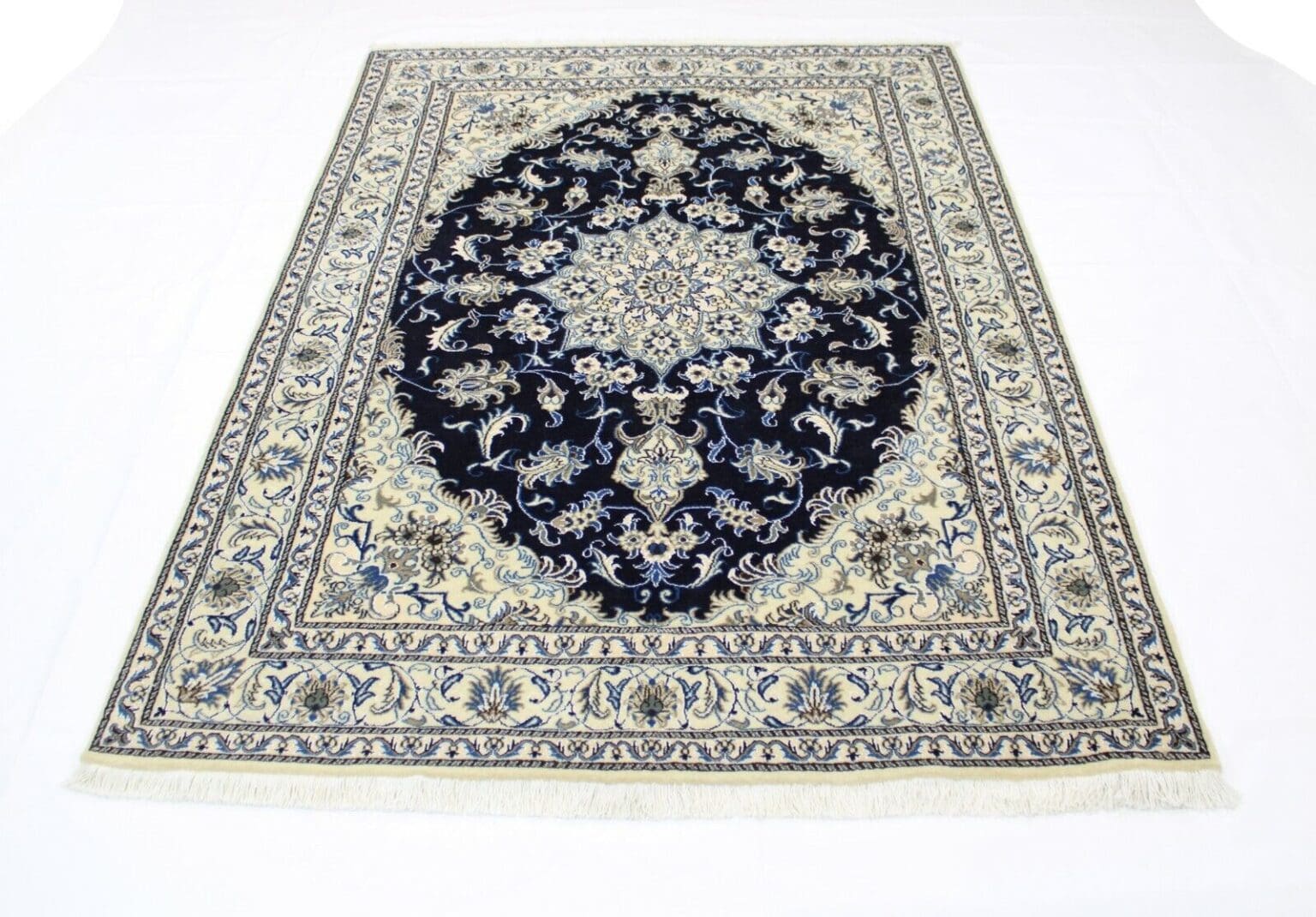
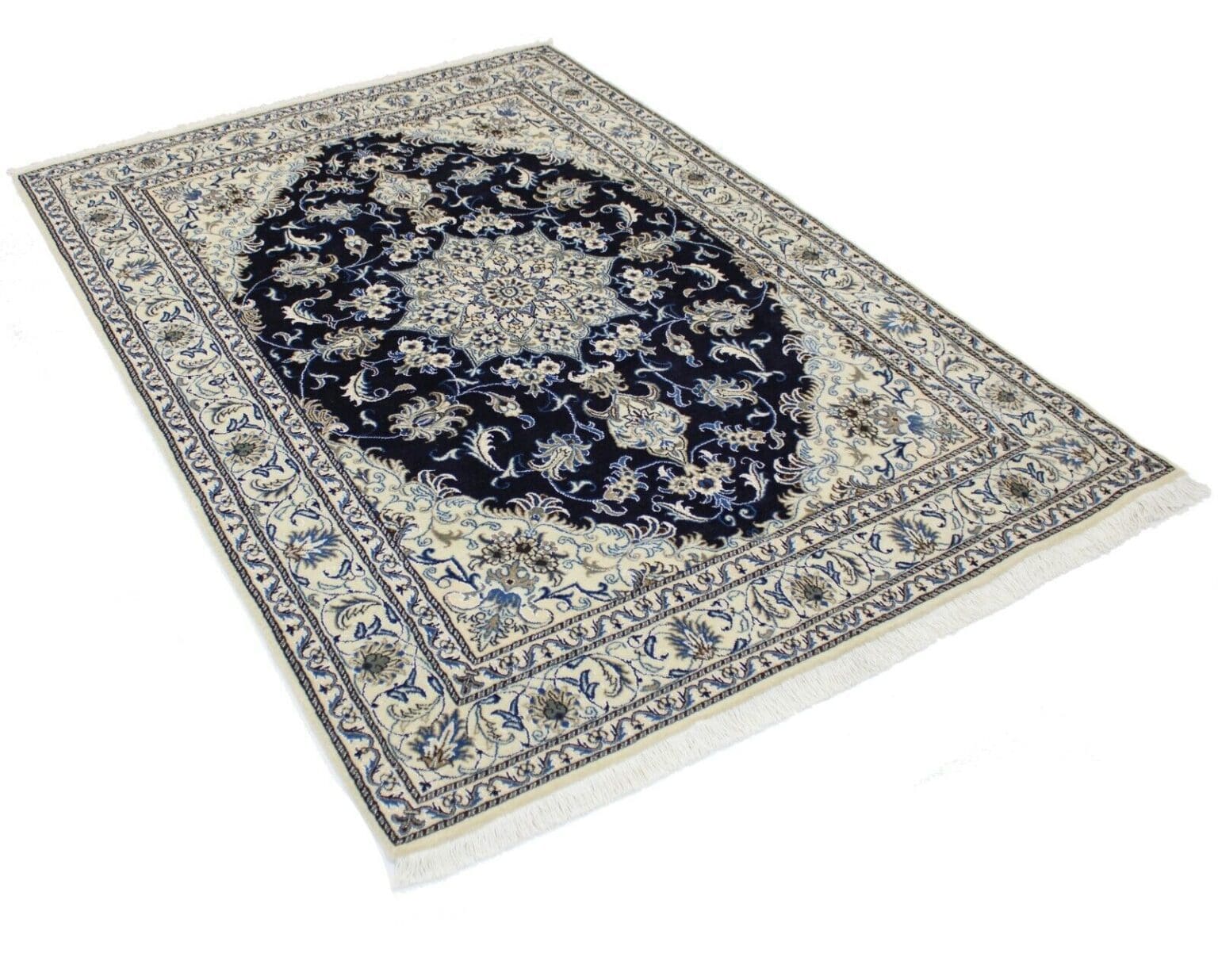
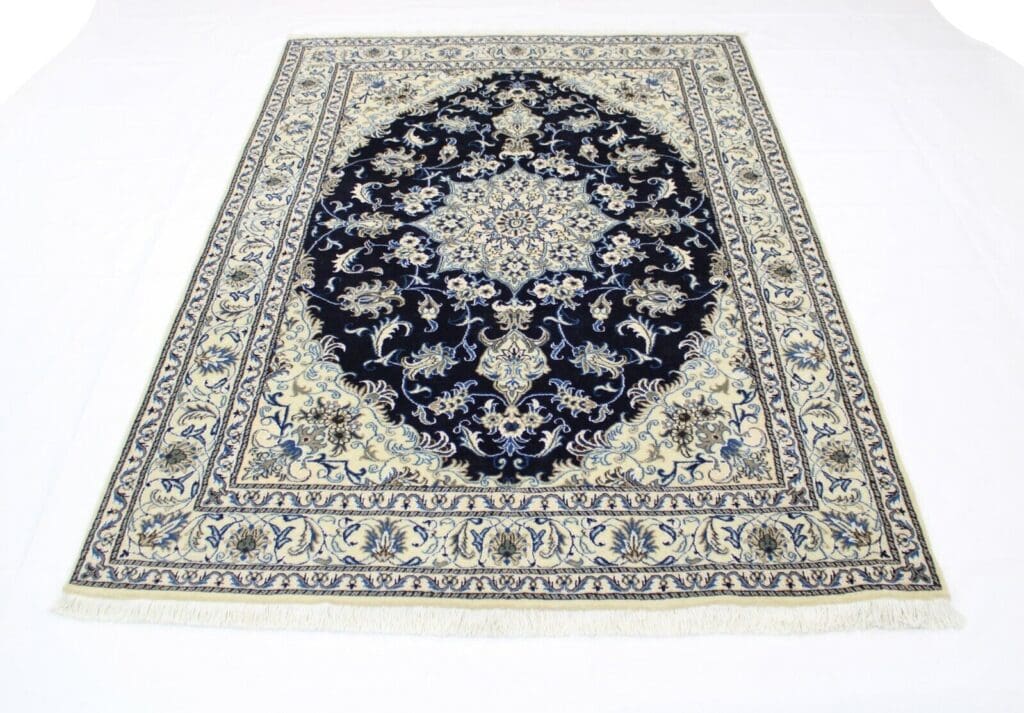
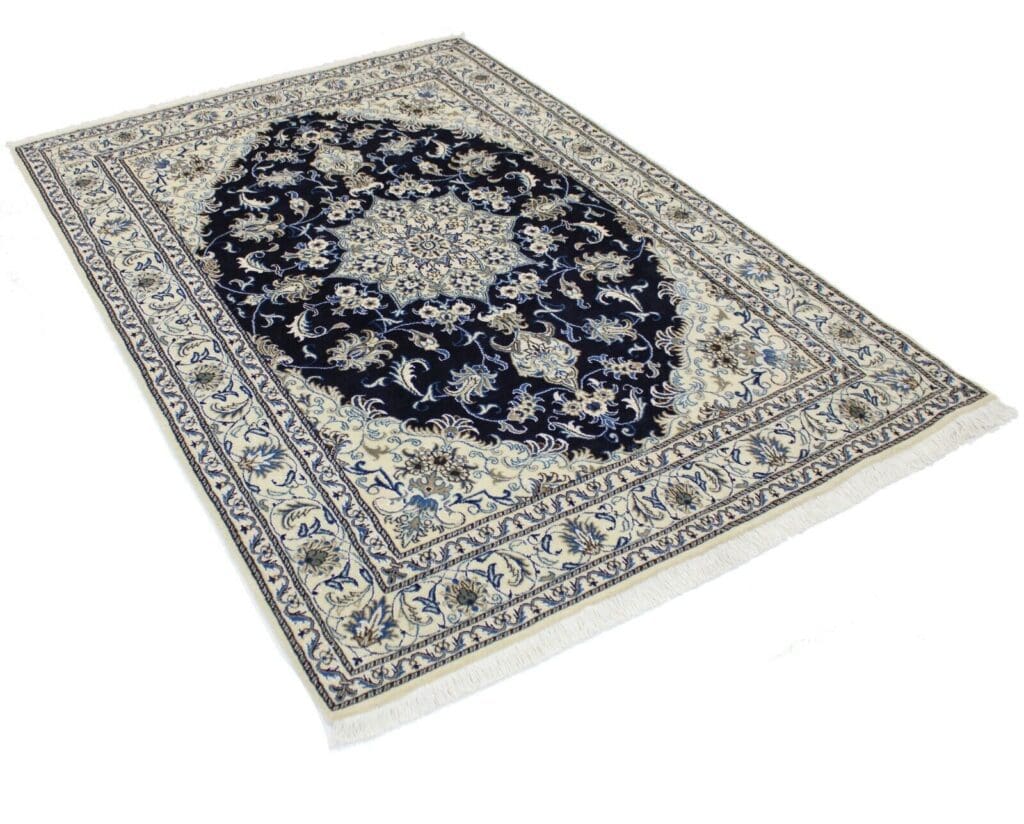
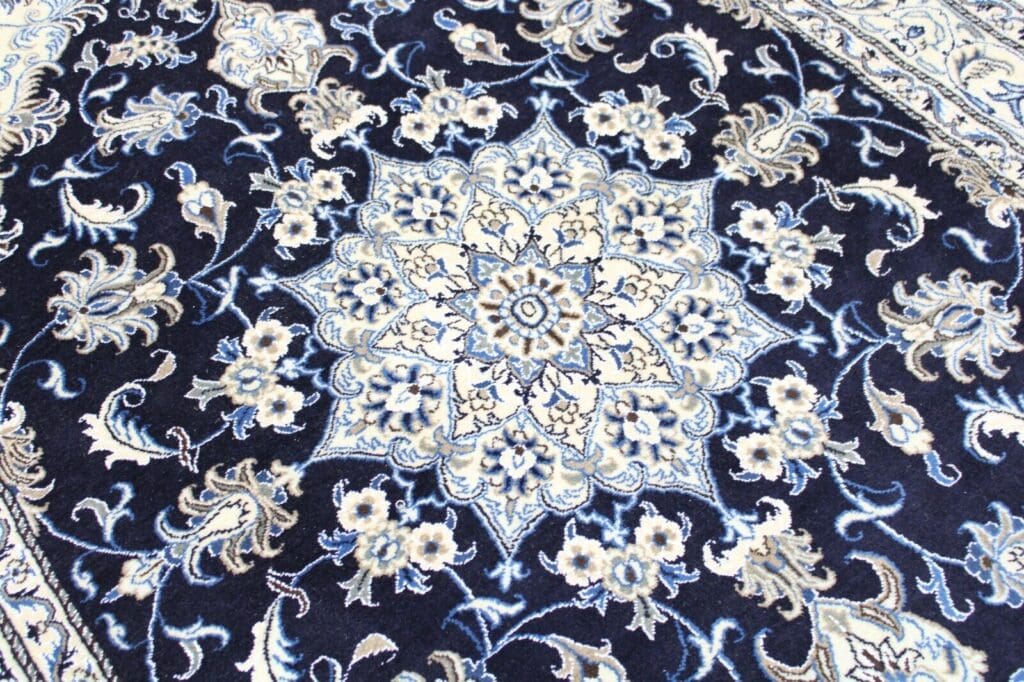
Perserteppich Nain 239 x 167 cm Wolle handgeknüpft
1893$
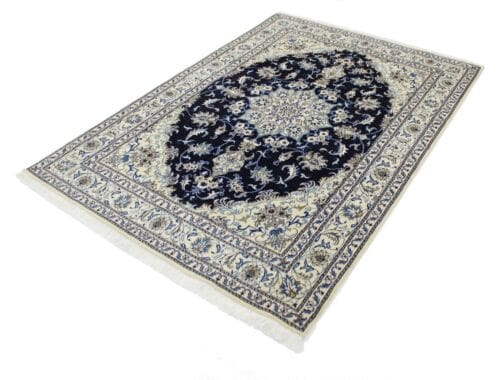
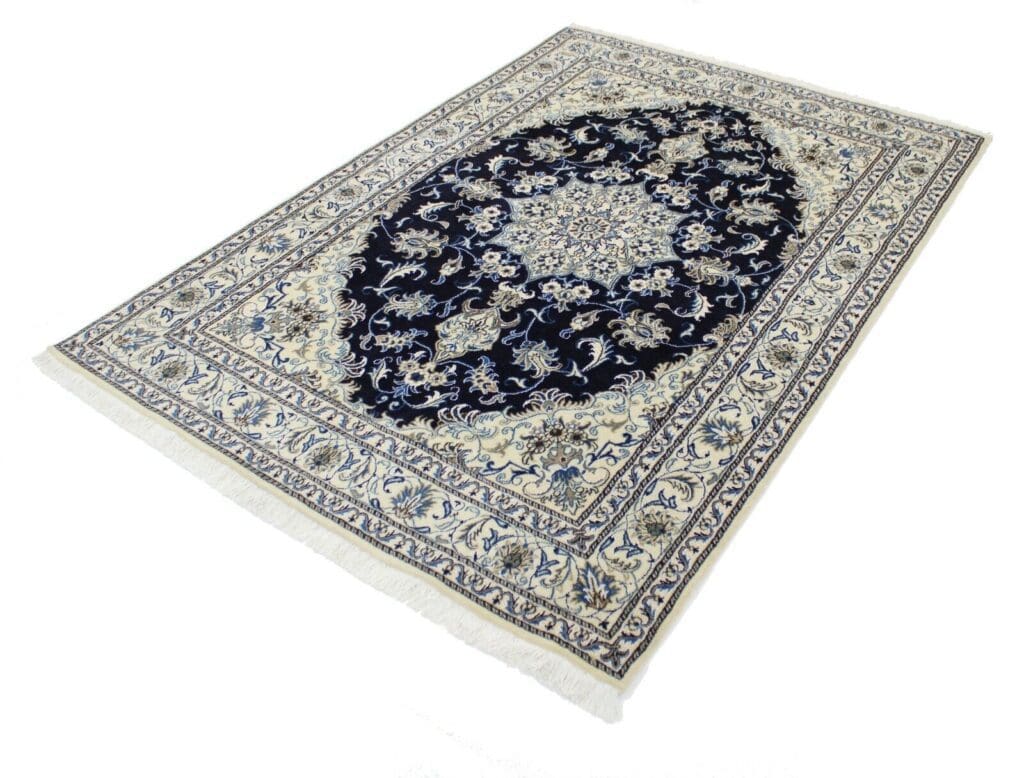
Handgeknüpfter Nain Perserteppich | Knotendichte: handgeknüpft | Material: Flor Wolle, Kette Baumwolle | Größe: 239 x 167 cm | Muster: Orientalisch mit Blumenmotiv | Zustand: Neu ohne Etikett, Top Zustand
This Nain Persian rug is hand-knotted with a wool pile and a cotton warp. The two materials serve different purposes within the construction. Wool forms the visible pile and gives the surface its tactile textile character. Cotton is used for the warp, which provides the longitudinal foundation for the rows of knots. In a hand-knotted rug, the visible pile and the internal foundation work together, even though they are not exposed in the same way.
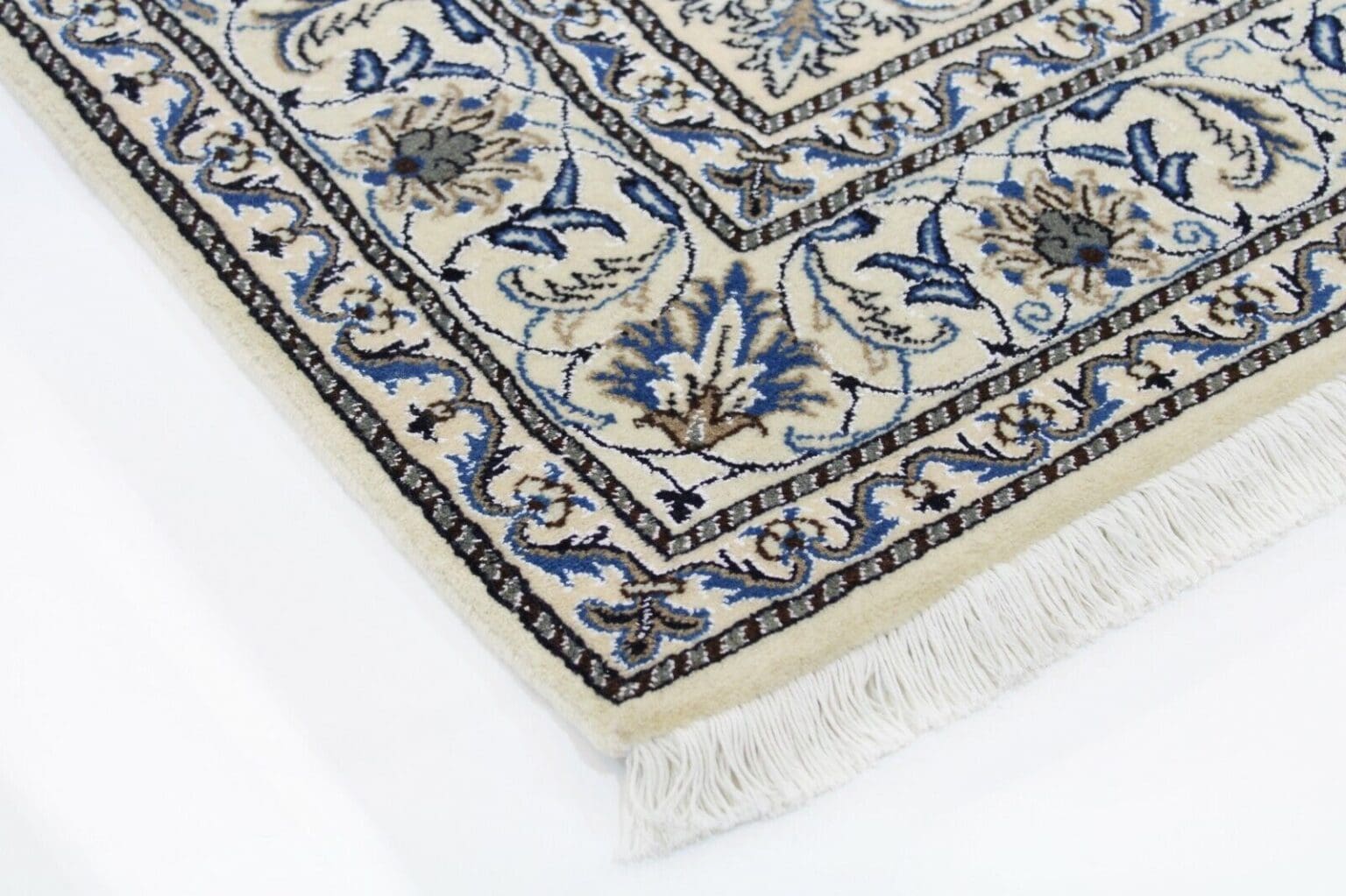
The pile is described as high pile. This creates a raised surface and distinguishes the rug from a flat-woven Kilim. Pile height affects the way the rug feels under the hand, catches light and presents its pattern. The surface of a knotted rug is not printed onto a completed textile. It is built from yarns that become part of the structure during the knotting process.
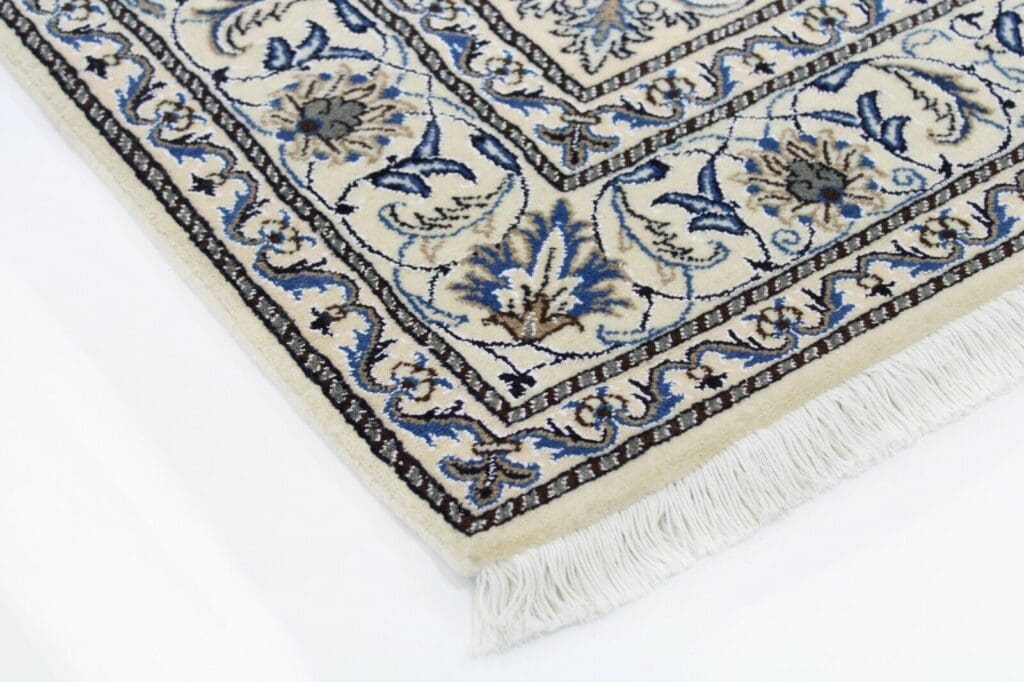
Hand-knotting begins with prepared warp threads. Individual knots are tied around the warp, and weft threads are passed through the rows to secure them. The process continues across the planned area until the pile has been formed. The surface is then trimmed and finished to create a usable pile. The product information identifies the rug as hand-knotted but does not provide a numerical knot density. The confirmed technical statement is therefore the hand-knotted construction itself.
The material information for this individual rug is wool and cotton: wool for the pile and cotton for the warp. This distinction is important because pile and foundation have separate functions. The wool pile is the part that is seen and touched, while the cotton warp belongs to the supporting structure. No additional fibre or percentage is stated for this rug. Its material description should therefore remain limited to the documented combination.
The rug is suitable for use over underfloor heating. Even heat distribution is appropriate when a textile is placed in such an environment, and regular care remains necessary. The condition is described as new without a label and as top condition. No age, date of manufacture or signature is stated. The rug’s documented technical profile consists of its wool pile, cotton warp, high pile and hand-knotted construction.
Hand-knotting is a sequence of controlled manual operations. The foundation is prepared, knots are inserted according to a design plan, and weft passes help hold the rows in place. Trimming gives the pile a consistent finish. The pattern and the structure consequently develop together. This differs from a surface decoration added after production, because the coloured knots themselves form the visible drawing. The craft process is part of what defines a Persian rug.
Wool has long been used for rug pile because it produces a resilient, touchable surface. Cotton is frequently used in foundations because it provides regular threads for the construction. These are general technical characteristics of the materials, not additional specifications beyond the source. In this rug, the stated roles are clear: wool is the pile material and cotton is the warp material. The high-pile finish determines the raised appearance of the completed surface.
Origin and Tradition
Nain is one of the recognised rug traditions of Iran. The name identifies a regional Persian weaving tradition rather than merely describing an oriental-looking pattern. This rug is identified as a Nain Persian rug and its origin is Iran. Persian rugs from Iran form a broad field of regional practices. Different weaving centres developed their own approaches to colour, ornament, proportion and technique, so the word Persian does not refer to one single visual formula.
Iranian rug making developed through generations of textile knowledge. Rugs served practical purposes in homes, but they were also made for formal settings and as carefully designed textile works. The craft combines a planned composition with a gradual manual process. A design is translated into rows of coloured knots, and the surface grows as the weaver works across the foundation. The relationship between ornament and construction is central to the history of Persian rugs.
Nain is generally associated with organised compositions and carefully worked ornament. This regional association does not mean that every Nain rug is identical. Individual pieces can differ in their arrangement, colour balance, scale, pile and execution. Tabriz, Isfahan and Kashan are also well-known Iranian rug centres, but each is connected with its own regional vocabulary. Their names should not be substituted for Nain when describing this particular rug.
The origin Iran places the rug within the wider culture of Persian hand-knotting. It does not imply that every Iranian rug uses the same palette or pattern. Across the country, local traditions developed different approaches to floral forms, geometric structures, central layouts and borders. Nain is one strand of this larger development. The present rug combines the Nain designation and Iranian origin with the documented blue colour, oriental floral motif and hand-knotted technique.
A traditional Persian rug is produced through the cooperation of design planning and manual skill. The warp is set up first, knots are tied in sequence, and weft threads help secure the rows. The pile is later trimmed to form the finished surface. Because the ornament is created through the knots, the pattern is part of the textile construction rather than a separate image applied afterward. This method explains the close relationship between technical structure and visual design.
Iranian rugs have been made in many formats, including narrow runners, smaller room pieces and larger floor coverings. The intended setting can influence the choice of format and the way the composition is planned. Size is one attribute of an individual rug, while regional identity also depends on origin, materials, technique and pattern. The dimensions of this rug are stated separately in the product information and should not be treated as a general feature of Nain rugs.
The history of Persian weaving includes the exchange of ideas between regions, workshops and generations of makers. Motifs can be adapted while retaining a regional character. Designs may include floral arrangements, geometric divisions or balanced repeating elements. The final appearance is shaped by the interaction of the design plan, yarn, knotting process and finishing of the pile. This allows rugs from a related tradition to share characteristics without being identical.
Related Iranian textiles include Kilims, which are flat woven and therefore have no knotted pile. Gabbeh rugs are often associated with bold colours and simpler patterns. Nain and Qom are further names connected with Persian rug traditions and developed design vocabularies. These comparisons provide context for Iranian textiles without changing the classification of this object. This rug remains a Nain Persian rug from Iran, not a Kilim or a Gabbeh.
Design and Pattern
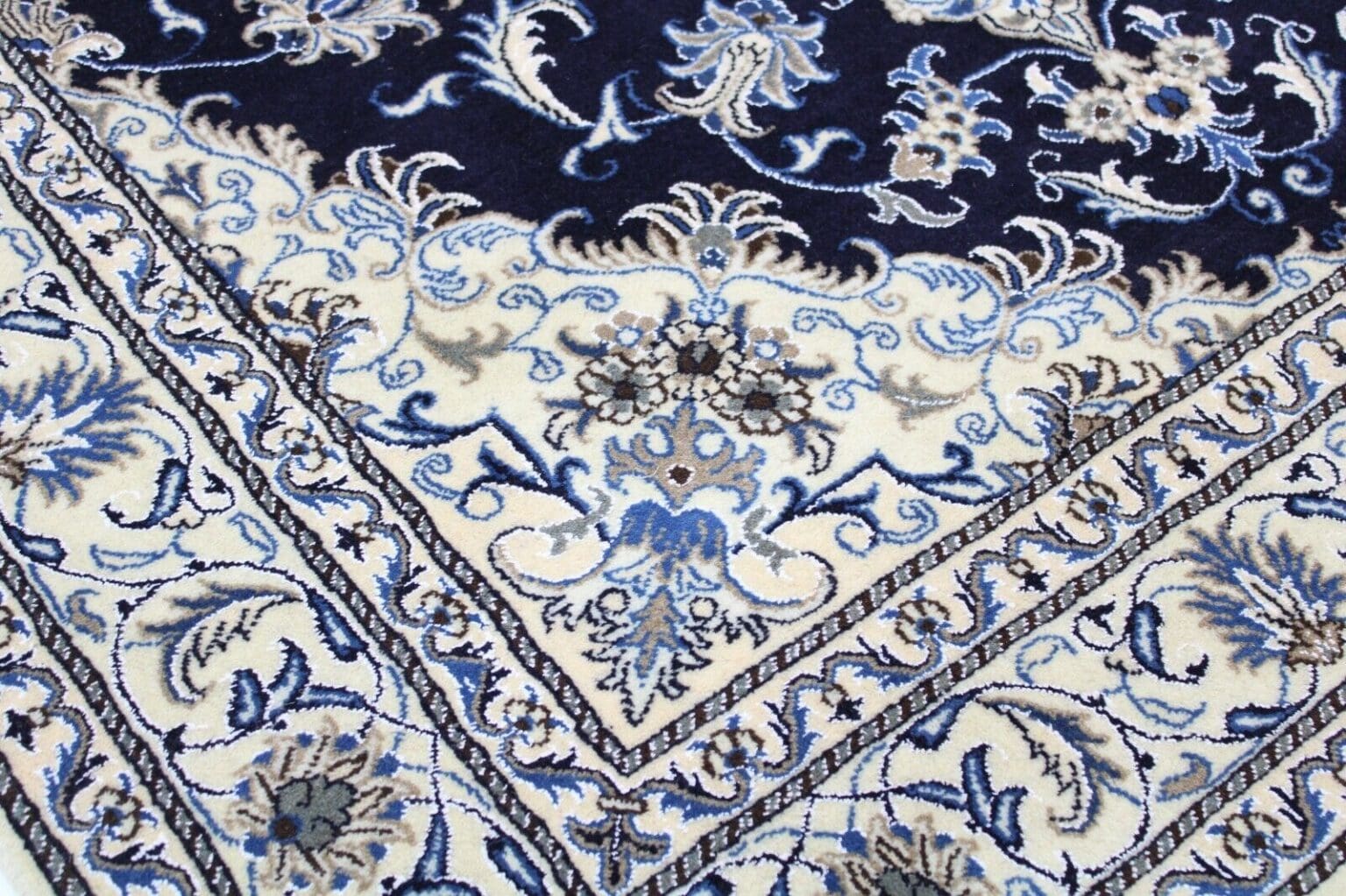
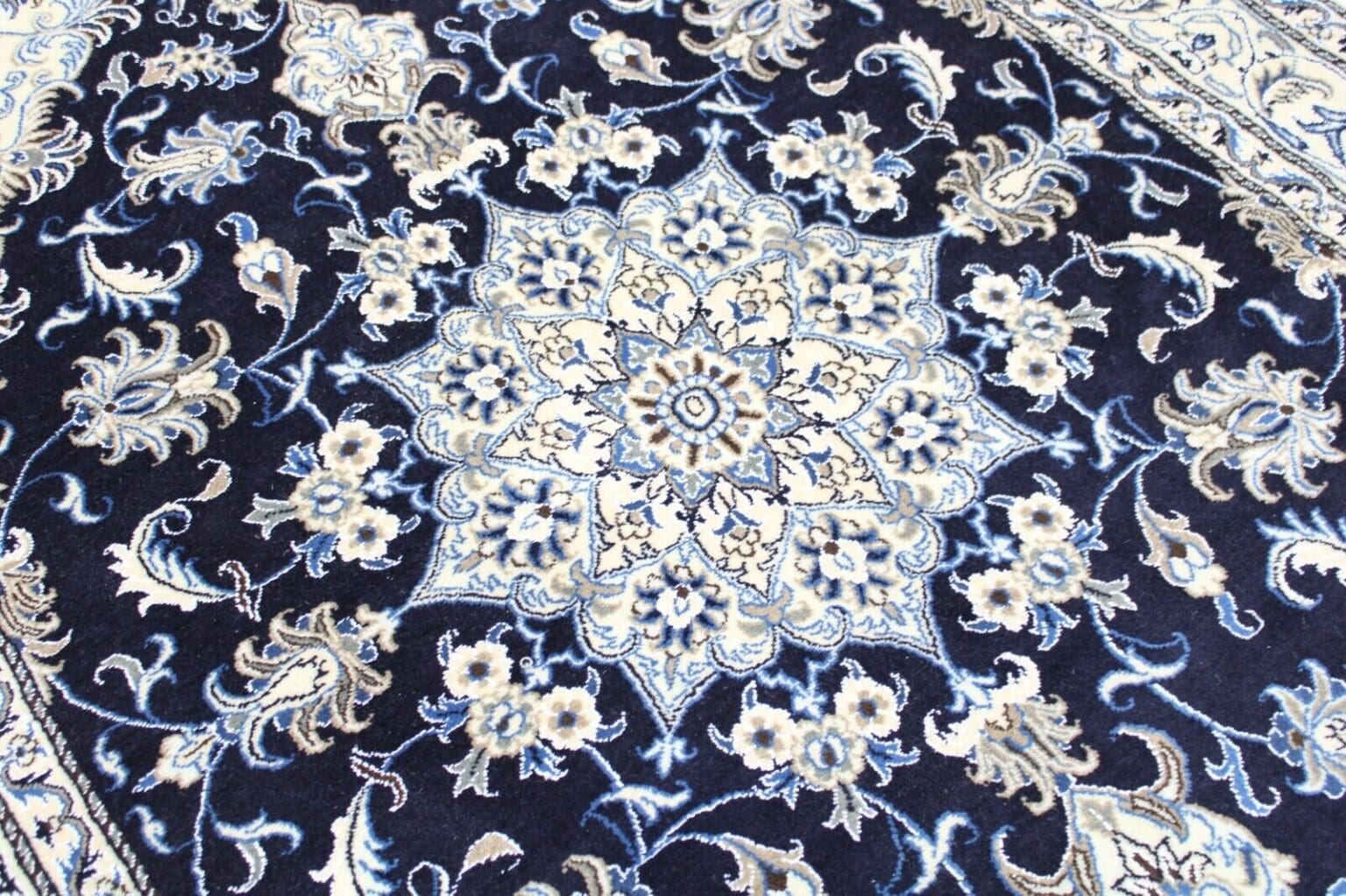
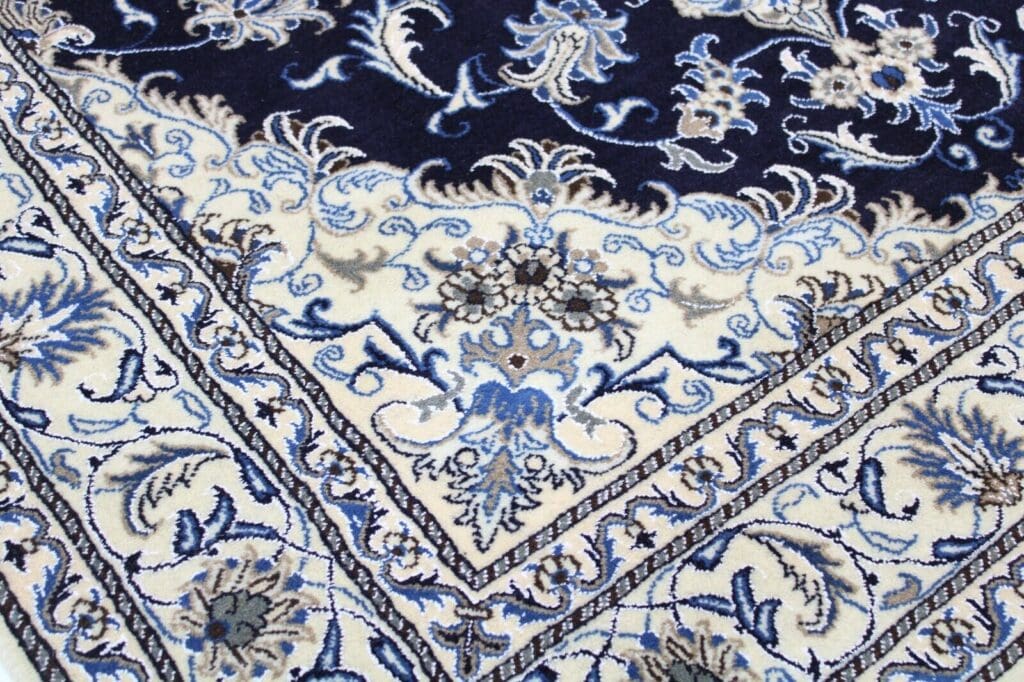
The pattern of this rug is described as oriental with a floral motif. Its documented design language is therefore based on flowers and ornamental plant forms. Floral motifs have a long history in Persian rug design. They may appear as individual blossoms, connected vines, repeated ornaments or parts of a balanced composition. The source identifies the floral character but does not specify a particular medallion, border arrangement or symbolic programme. Those details are not added here.
Persian ornament often transforms natural forms into a structured textile vocabulary. A flower may be simplified, mirrored, repeated or joined to scrolling lines. Such treatment makes the motif suitable for distribution across a woven or knotted field. Repetition creates rhythm, while the spaces between forms help define the composition. The phrase oriental floral motif describes this documented category without assigning a more specific named design to the rug.
The stated colour is blue. In Persian rugs, blue can be used for larger fields, outlines, blossoms, leaves or contrasts between decorative areas. Its effect depends on the surrounding arrangement and the density of the ornament. No additional colours or exact colour distribution are specified for this particular rug. Its design should therefore be described through the confirmed combination of blue colouring and an oriental floral motif, rather than through an invented palette.
In a hand-knotted rug, the pattern is made from coloured knots. Each knot contributes a small point to the drawing, while many points together create lines, flowers and larger ornamental structures. The high pile influences the tactile effect and the way light moves across the surface. From close range, the texture and transitions between colours become more visible. From farther away, the overall floral organisation is easier to read.
Nain is broadly discussed as a tradition of controlled composition and carefully developed ornament within Iranian rug making. Its wider vocabulary may include floral arrangements, scrolling forms and balanced structures. For this individual rug, the confirmed description is oriental with a floral motif. It is therefore appropriate to discuss Persian floral design in general while avoiding unsupported claims about a central medallion, a specific border, a named boteh or a particular symbolic meaning.
Floral decoration has remained important in Iranian textile art because it can connect natural imagery with formal order. Flowers and vines can be arranged to lead the eye across the field, to frame a central area or to repeat at regular intervals. The meaning of a motif is not automatically fixed by its presence; its visual role depends on the composition. Here, the reliably stated design information is the floral oriental character and the blue colour.
The pattern cannot be separated from the pile that carries it. Knots create the coloured points, weft threads stabilise the rows and the finished pile joins the individual elements into a continuous surface. Construction and design therefore contribute together to the appearance. In this rug, wool pile, cotton warp, high pile, blue colouring and an oriental floral motif are the documented foundations for describing its design and technical character.
Special Features
The notable documented features of this individual rug are its Nain designation, Iranian origin, hand-knotted construction, wool pile, cotton warp and high pile. It is blue and has an oriental floral motif. It is also suitable for use over underfloor heating. These facts describe the rug’s origin, materials, structure, appearance and intended use without adding an unsupported age, signature or numerical knot density.
The condition is stated as new without a label and top condition. This describes the offered condition and is not an age statement. No manufacturing date is provided, and no signature is mentioned. The rug is therefore presented through the characteristics explicitly identified in the source: Nain, Iran, hand-knotted, wool and cotton, high pile, blue and floral oriental in pattern.
Care should be regular and gentle. Vacuuming helps remove loose dust and particles from the high pile, while occasional professional cleaning can treat deeper soiling with methods appropriate to a hand-knotted wool rug. Strong direct sunlight should be avoided where possible so that the blue colour remains as even as possible. When the rug is placed over underfloor heating, even heat distribution is sensible. These are general care principles for this type of textile and do not alter the stated condition.
FAQ
How should I care for this Persian rug?
Regular vacuuming helps remove loose dust and particles from the high pile. The surface should be treated gently, since a hand-knotted wool pile benefits from suitable cleaning methods rather than unnecessarily harsh treatment. Occasional professional cleaning can support the upkeep of the textile surface. Strong direct sunlight should be avoided where possible to reduce uneven fading of the blue colour. If the rug is used over underfloor heating, the heat should be distributed evenly. These measures support normal care but do not replace an individual assessment of unusual stains or damage.
Where does this Nain Persian rug come from?
This rug comes from Iran and is identified as a Nain Persian rug. Nain refers to a regional tradition within Iranian Persian rug making, with its own established approaches to ornament and craftsmanship. Iranian rugs vary by region in their colours, designs and technical methods. Tabriz, Isfahan and Kashan are other recognised Iranian rug regions, but they are not the origin stated for this piece. For this rug, the documented origin is Iran and the regional designation is Nain.
What is the difference between a Persian rug and a Kilim?
A Persian rug such as this one is hand-knotted and has a pile. This rug is specifically described as having a high wool pile and a cotton warp. A Kilim, by contrast, is flat woven and does not have a knotted pile. The two constructions consequently differ in surface, handle and appearance. A Kilim generally presents a flatter textile surface, while a hand-knotted high-pile rug has a raised and tactile pile. The difference is therefore technical as well as visual.
To provide the best experiences, we use technologies like cookies to store and/or access device information. Consenting to these technologies will allow us to process data such as browsing behavior or unique IDs on this site. Not consenting or withdrawing consent, may adversely affect certain features and functions.
Functional Immer aktiv
The technical storage or access is strictly necessary for the legitimate purpose of enabling the use of a specific service explicitly requested by the subscriber or user, or for the sole purpose of carrying out the transmission of a communication over an electronic communications network.
Preferences
The technical storage or access is necessary for the legitimate purpose of storing preferences that are not requested by the subscriber or user.
Statistics
The technical storage or access that is used exclusively for statistical purposes.The technical storage or access that is used exclusively for anonymous statistical purposes. Without a subpoena, voluntary compliance on the part of your Internet Service Provider, or additional records from a third party, information stored or retrieved for this purpose alone cannot usually be used to identify you.
Marketing
The technical storage or access is required to create user profiles to send advertising, or to track the user on a website or across several websites for similar marketing purposes.
Hallo! Suchen Sie einen bestimmten Teppich oder haben Sie Fragen zu Herkunft, Qualität, Größe oder Preis? Ich berate Sie gerne persönlich – kostenlos und unverbindlich.
Nicht gefunden, was Sie suchen? Über unser Netzwerk finden wir Ihren Wunschteppich – mit weltweitem Versand.
Abonnieren Sie unseren Newsletter und erhalten Sie unser Lexikon gratis als PDF: die Geschichte der Perserteppiche, historische Quellen, Knoten, Regionen und Motive. Oder folgen Sie uns auf Instagram, YouTube und TikTok.
 SICHERE ZAHLUNG
 VERSANDPARTNER